
A practical manual for zookeepers
Giraffe enrichment
best practices.
Browse, explore, choose, rest.
Build enrichment around what giraffes do.
Numbered activity sheets with preparation, observations, precautions and scientific sources. Find a documented practice, adapt it to your herd and record what each animal does.
Explore the activities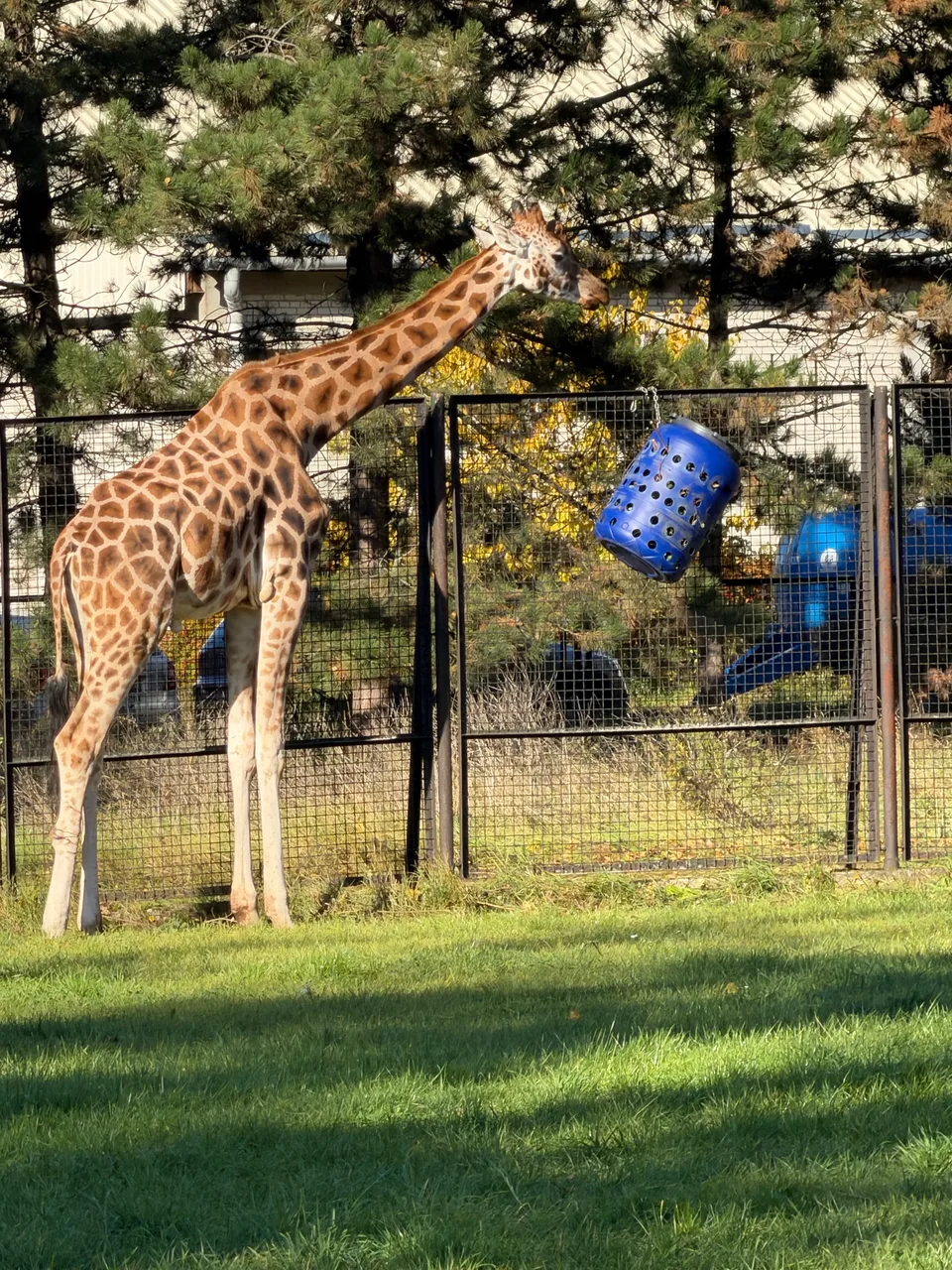
An example of practice, not a construction specification.
A library of opportunities.
The catalogue brings together 39 documented care and enrichment practices. Each chapter restarts the numbering: 1.01 is the first browse entry, and 2.01 is the first feeder entry. Numbers help you find a practice; they are not a recommended sequence or ranking. Browse means leafy branches and other approved plant material offered as food.
These entries draw on giraffe research, professional care guidance and published zoo practice. A documented method still needs to fit the giraffes, feeding plan, equipment and working procedures at your zoo. A particular welfare benefit may not have been tested for every method. Read the planning guide.
What kind of entry is it?
- Enrichment practice
- A documented method to assess with your herd.
- Care foundation
- An everyday provision to maintain, not ration as novelty.
- Habitat project
- A change to plan with the relevant zoo teams.
- Observation
- A way to understand access, behaviour and outcomes.
Find an activity
The enrichment library.
Open a chapter below, or go straight to a numbered activity.
Show activities
- 1.01Whole branches in secure browse sockets
- 1.02Approved browse species and individual use
- 1.03Browse at separate feeding stations
- 1.04Use an established alternate browse station
- 1.05Preserved browse in winter
- 1.06Several smaller browse deliveries
- 1.07Accessible browse at suitable heights
- 1.08Maintain browse access during visitor feeding
- 1.09Evening browse allocation
- 1.10Approved browse-tree presentation
- 1.11Retain approved twigs and bark after leaf stripping
Show activities
- 5.01Natural rubbing point
- 5.02Open walking loop
- 5.03Connected indoor location choice
- 5.04Protected porch access
- 5.05Sun and shade location choice
- 5.06Access to an existing quiet retreat
- 5.07Resting-surface choice
- 5.08Familiar-companion access
- 5.09Review social access at browse stations
- 5.10Optional fixed scratching surface
1. Browse and foraging
Start with the work of selecting leaves, using the tongue and moving between feeding places. Browse belongs in the feeding plan every day; vary how suitable portions are presented.
1.01Care foundationWhole branches in secure browse sockets
Secure approved leafy branches in the usual holders, within easy reach. Giraffes can choose leaves and pull them from the branch with their tongues during ordinary feeding.
Purpose: Support leaf selection and tongue stripping.
Prepare
- Approved leafy browse
- Existing inspected browse sockets
How to offer it
- Select branches from the planned ration and check their identity and condition.
- Secure them in familiar sockets using the established fitting procedure.
- Check reach for each giraffe while keeping ordinary forage available.
Watch and record
Record tongue use, edible material remaining and animals displaced.
Finish and review
Remove spoiled or damaged branches; inspect sockets and record leftovers.
1.02Enrichment practiceApproved browse species and individual use
When more than one approved browse species is already in the feeding plan, offer those branches in familiar holders and record what each giraffe eats. Account for position, amount and social access before interpreting a preference.
Purpose: Record how each giraffe uses familiar browse.
Prepare
- Two already approved browse species
- Equivalent familiar holders
How to offer it
- Record the amount of each approved species offered from the ration.
- Use familiar holders and check that each giraffe can reach the browse.
- Across ordinary browse rounds, record species, position and access before comparing use.
Watch and record
Record approach, parts eaten, leftovers and refusals for each animal.
Finish and review
Remove remnants and compare repeated observations, accounting for location and access.
1.03Enrichment practiceBrowse at separate feeding stations
Spread the planned leafy branches across several safe feeding places. Giraffes can move between them or feed apart from one another, provided every animal can still reach food.
Purpose: Allow voluntary movement and parallel feeding.
Prepare
- Planned browse allocation
- Several familiar feeding locations
How to offer it
- Check clear routes and independent access between stations.
- Distribute the allocation without removing familiar forage access.
- Watch less assertive and shorter animals as patches empty.
Watch and record
Record who reaches each patch, transitions and displacements.
Finish and review
Collect leftovers and adjust poorly accessible stations.
1.04Enrichment practiceUse an established alternate browse station
Where a second established station is available, place one portion of the planned browse allocation there while keeping usual feeding points accessible. Record whether each giraffe can reach and use it.
Purpose: Maintain access to browse at familiar feeding places.
Prepare
- Planned browse allocation
- Existing approved feeding stations
How to offer it
- Confirm that the alternate station is approved, familiar and accessible.
- Place one portion of the planned browse allocation there without removing ordinary forage access.
- Observe use and any blocked access as the stations empty.
Watch and record
Record visits, avoidance, detours and access by each animal.
Finish and review
Remove remnants and review stations that obstruct movement or exclude an animal.
1.05Care foundationPreserved browse in winter
Use properly stored, approved branches when fresh leaves are scarce in winter. This keeps a familiar kind of leaf-picking available as part of the normal feeding plan.
Purpose: Maintain familiar browse opportunities outside the growing season.
Prepare
- Identified stored browse
- Established storage and preparation procedure
How to offer it
- Check batch identity, storage condition and suitability.
- Prepare the browse using the institution’s established process.
- Present it in familiar holders as part of the approved ration.
Watch and record
Record acceptance, edible intake, waste and duration of access.
Finish and review
Remove spoiled remnants and use records to adjust the supply plan.
1.06Enrichment practiceSeveral smaller browse deliveries
Divide the same planned amount of leafy branches into several deliveries during the day. This may provide more chances to feed, while ordinary forage stays available between deliveries.
Purpose: Spread foraging opportunities across the day.
Prepare
- Planned daily browse allocation
- Feeding and depletion record
How to offer it
- Identify when existing browse becomes unavailable.
- Divide the same allowance into feasible deliveries under the feeding plan.
- Maintain suitable forage between deliveries and record actual availability.
Watch and record
Track feeding distribution, depletion and anticipatory waiting.
Finish and review
Clear remnants and revise delivery times where gaps persist.
1.07Enrichment practiceAccessible browse at suitable heights
Place approved leafy branches in familiar mounts each giraffe can comfortably reach. Check access again after the most reachable leaves have gone.
Purpose: Maintain browse access across body sizes.
Prepare
- Approved browse
- Existing mounts at suitable heights
How to offer it
- Check comfortable access for the animals using each station.
- Offer comparable browse at the available heights.
- Watch how access changes as branches are stripped.
Watch and record
Record each animal’s reach, stance and access as branches are stripped.
Finish and review
Remove remnants and revise mounts that become inaccessible.
1.08Enrichment practiceMaintain browse access during visitor feeding
If visitor feeding is part of the zoo’s programme, keep an established browse station outside the visitor-feeding area accessible with approved browse. Record whether each giraffe can use it while food and social access remain available.
Purpose: Keep routine food and social access available.
Prepare
- Approved browse
- Existing station away from public-feeding traffic
How to offer it
- Check that the existing station remains reachable without isolating an animal.
- Supply approved browse within the feeding plan during visitor feeding.
- Observe individual use, waiting and crowding near both areas.
Watch and record
Record individual choice, displacements and interruptions.
Finish and review
Remove leftovers and review whether the quiet option remained usable.
1.09Care foundationEvening browse allocation
Provide the planned evening portion of leafy branches where every giraffe can reach it. Check when the food runs out or becomes unreachable during the night.
Purpose: Support access to browse into the night.
Prepare
- Approved evening browse allocation
- Existing night observation method
How to offer it
- Check that stations leave lying and travel areas clear.
- Offer the planned evening portion with reach suitable for every animal.
- Record when edible material becomes depleted or unreachable.
Watch and record
Observe night feeding, rumination, pacing and rest.
Finish and review
Remove unsuitable remnants at the next safe care round and review gaps.
1.10Enrichment practiceApproved browse-tree presentation
Secure approved leafy branches to a stable, tree-like structure using the zoo's established method. Watch how giraffes take leaves and whether they push or rub against the structure.
Purpose: Offer a tree-like surface for leaf acquisition.
Prepare
- Existing approved browse-tree structure
- Familiar approved branches
How to offer it
- Inspect stability, protrusions and each animal’s reach.
- Fit the planned browse using the established mounting procedure.
- Observe feeding separately from rubbing and forceful contact.
Watch and record
Record leaf acquisition, exploration, avoidance and damage.
Finish and review
Remove remnants and suspend use if the structure is damaged.
1.11Enrichment practiceRetain approved twigs and bark after leaf stripping
After giraffes remove the leaves, leave suitable approved twigs and bark available for the rest of the feeding period. Watch whether they use these parts while normal forage continues.
Purpose: Allow use of permitted non-leaf browse parts.
Prepare
- Partly stripped approved browse
- Plant-part approval and condition record
How to offer it
- Confirm twigs and bark are permitted for this batch.
- Inspect stripped branches for damage or contamination.
- Retain suitable material during the browse period while normal forage continues.
Watch and record
Record leaf, twig and bark use separately for each animal.
Finish and review
Discard damaged or contaminated remnants and record refusals.
2. Feeders and food finding
A feeder can change how a giraffe collects familiar food. Keep an easy option, use the planned ration and watch for successful access as well as effort.
2.01Enrichment practiceTongue-access roughage feeder
Put part of the normal fibrous feed in a familiar, secure feeder that giraffes can reach with their tongues. Watch whether each animal can get enough food without struggling with the feeder.
Purpose: Offer achievable tongue manipulation of roughage.
Prepare
- Existing assessed tongue-access feeder
- Allocated approved roughage
How to offer it
- Inspect all openings and fastenings under the fixture procedure.
- Fill with the allocated food while retaining easy feeding access.
- Observe individual extraction and fixture contact during use.
Watch and record
Record tongue use, intake, unsuccessful attempts and oral behavior beyond feeding.
Finish and review
Empty and clean the feeder; inspect for damage before reuse.
2.02Enrichment practiceEasy versus effortful feeding choice
Offer the same planned food through an easy feeder and a feeder that takes a little more work. Let giraffes switch between them, then watch their choices and how much they actually eat.
Purpose: Let the giraffe choose feeding effort.
Prepare
- Two familiar assessed feeding stations
- The same approved food
How to offer it
- Record the amounts available at easy and more effortful stations.
- Keep both accessible and allow switching or refusal.
- Reverse positions on comparable repeats to check location effects.
Watch and record
Record choices, switching, failed attempts and actual intake.
Finish and review
Collect leftovers and retain the easier option in future provision.
2.03Enrichment practiceSlow-feeder presentation of the existing ration
Present part of the existing food allowance in a familiar feeder that releases it more slowly. Watch whether giraffes still get their full portion comfortably, even if feeding takes longer.
Purpose: Prolong achievable food acquisition.
Prepare
- Locally assessed slow feeder
- Defined ration portion
How to offer it
- Check the familiar feeder’s condition and individual fit.
- Present the allocated portion alongside ordinary feeding access.
- Record intake as well as time spent manipulating food.
Watch and record
Watch unsuccessful attempts, fatigue, exclusion and behavior after feeding.
Finish and review
Empty, clean and inspect the feeder; review before extending use.
2.04Enrichment practiceOne small feeder-difficulty adjustment
If giraffes struggle with an approved feeder, or their use changes over time, adjust one feature at a time. Keep an easy feeding option and check successful eating, not effort alone.
Purpose: Keep manipulation achievable as familiarity changes.
Prepare
- Established assessed feeder
- One approved adjustable feature
How to offer it
- Record the familiar version and current individual response.
- Change only the agreed feature, retaining an easy alternative.
- Compare successful extraction with failed attempts and intake.
Watch and record
Record duration, voluntary return and signs of frustration.
Finish and review
Clean and inspect the feeder; revert if access or intake worsens.
3. Sensory investigation
A smell or a small change may invite investigation, or it may be ignored or avoided. Make one change at a time and keep retreat possible. Interest alone does not establish a welfare benefit.
3.01Enrichment practiceObserve response to an approved scent
If the zoo already uses an approved scent presentation, observe each giraffe’s response alongside ordinary behaviour. An unscented carrier may help separate interest in the holder from interest in the scent; this local comparison is not a welfare test.
Purpose: Record each giraffe’s investigation or avoidance.
Prepare
- Locally approved scent
- Approved inaccessible carrier and optional blank
How to offer it
- Use only approved materials and secure the carrier under the zoo’s procedure.
- If using an unscented comparison, keep both carriers away from essential resources.
- Allow approach or withdrawal and record repeated observations.
Watch and record
Record investigation, avoidance, location and ordinary activity.
Finish and review
Remove carriers and clean away residue before review.
3.02ObservationReview response to an approved fixture change
After a zoo-approved change to a familiar fixture, record whether giraffes approach, ignore or avoid it while ordinary feeding and retreat remain available. Investigation alone does not show a welfare benefit.
Purpose: Observe individual responses after a minor approved change.
Prepare
- Familiar approved fixture
- Locally assessed alteration
Work through it
- Confirm the change was approved under the zoo’s procedure and routes remain clear.
- Keep ordinary resources available while the altered fixture is in place.
- Record approach, avoidance and ordinary feeding before making another change.
Watch and record
Record latency, inspection, detours, avoidance and access.
Finish and review
Restore the familiar version if the change disrupts essential activity.
4. Familiar voluntary training
Use existing positive-reinforcement plans to offer familiar, manageable interactions. These entries are for trained staff practising established behaviours, with the giraffe free to disengage.
4.01Enrichment practiceVoluntary nose-target refresher
Invite a giraffe already trained to touch a target with its nose to practise that familiar action. Reward it under the existing training plan and let it pause or leave.
Purpose: Maintain a familiar cooperative-care foundation.
Prepare
- Established target
- Trained keeper and allocated reinforcement
How to offer it
- Use the individual’s existing protected-contact training position.
- Offer its established target cue and reinforce the familiar response.
- Pause on withdrawal and allow the animal to leave.
Watch and record
Record voluntary initiation, responses, pauses and context.
Finish and review
Clean and store the target; record reinforcement within the ration.
4.02Enrichment practiceVoluntary recall refresher
Give a giraffe the familiar signal to come to a keeper along a clear route. Reward a voluntary approach under its existing plan, and accept no response without pressure.
Purpose: Maintain an established approach cue.
Prepare
- Trained keeper
- Familiar protected-contact position
How to offer it
- Check the route and footing are clear.
- Give the already learned recall cue according to the individual plan.
- Reinforce voluntary approach; accept no response or withdrawal.
Watch and record
Record responses, approach time, distractions and nearby animals.
Finish and review
Record reinforcement and any cue or route difficulty for the training team.
4.03Enrichment practiceObserve a familiar skill with a second trained keeper
Where the zoo’s established care plan already assigns a familiar skill to more than one trained keeper, observe a routine session with the second keeper. Use the agreed cues and record whether the giraffe responds or disengages.
Purpose: Check a mastered response already shared across trained staff.
Prepare
- Second competent keeper
- Established cue and reinforcement criteria
How to offer it
- Confirm both keepers use the existing agreed signal and criteria.
- Observe a mastered behavior from the established protected-contact position.
- Pause if the giraffe withdraws or responses become uncertain.
Watch and record
Record initiation, response consistency and differences between trainers.
Finish and review
Compare records and resolve inconsistent cues before repeating.
4.04Enrichment practiceView a harmless care prop at a chosen distance
Show an approved care prop from a distance the giraffe already accepts. During an established training session, let it look or approach voluntarily and move the item farther away if it avoids it.
Purpose: Build familiarity with routine inert equipment.
Prepare
- Assessed nonclinical prop
- Individual shaping plan
How to offer it
- Place the prop at a distance already comfortable for the animal.
- During a familiar session, reinforce voluntary engagement under its plan.
- Allow retreat and increase distance if avoidance appears.
Watch and record
Record chosen distance, orientation and continuation of normal behavior.
Finish and review
Remove the prop safely and review the next step with the trainer.
4.05Enrichment practiceRespect engagement and withdrawal in familiar training
During an established voluntary-care session, offer a familiar task and observe when the giraffe engages or withdraws. Pause according to its existing training plan; do not introduce a new initiation signal or make ordinary care depend on participation.
Purpose: Make voluntary participation observable.
Prepare
- Mastered task and trained keeper
- Existing session record
How to offer it
- Offer the familiar task from the approved protected-contact position.
- Record the animal’s response and pause when it disengages.
- Allow a voluntary return under the established plan without withholding care.
Watch and record
Record participation, pauses, returns and whether withdrawal was respected.
Finish and review
Log the session and review any mismatch between animal signals and keeper actions.
6. Habitat and existing exhibits
Habitat structures and established mixed exhibits can shape what giraffes can reach and where they choose to spend time. Review access and individual responses in the setting your zoo already manages.
6.01ObservationReview an existing mixed exhibit
In an exhibit that already houses giraffes with another species, review how each species uses food, water, resting places and escape routes. This checks an existing arrangement; it is not a suggestion to add animals.
Purpose: Check compatibility and independent resource access.
Prepare
- Existing exhibit map
- Records from every species’ keepers
Work through it
- Map routes, retreats, food, water and resting places for each species.
- Watch who can use each resource without displacement.
- Compare observations with injuries, avoidance and recent social changes.
Watch and record
Record affiliation, retreat, blocked access and aggressive encounters.
Finish and review
Agree specific management changes and a follow-up review with all teams.
6.02Habitat projectSecured branch structure for exploration
Consider a firmly secured branch structure that giraffes may inspect without needing to approach it. Plan the installation and escape routes with the relevant teams before offering access.
Purpose: Offer optional inspection of a natural structure.
Prepare
- Specialist-designed approved timber feature
- Structural and route inspection record
Work through it
- Assess stability, trapping gaps and routes around the proposed feature.
- Install through established animal-separation procedures.
- Supervise introduction and observe both approach and avoidance.
Watch and record
Record sniffing, investigation, route changes and damaging contact.
Finish and review
Inspect after use and revise or withdraw any unsafe feature.
7. Observation and review
A useful calendar includes time to find out what happened. Record each giraffe’s opportunity and response, including animals that could not reach the activity or were out of view.
7.01ObservationSeasonal browse continuity check
Before the season changes, check which approved leafy branches will remain available and how they can be offered. Compare the plan with what each giraffe actually reaches and eats.
Purpose: Prevent seasonal losses of foraging opportunity.
Prepare
- Seasonal browse inventory
- Individual access and feeding records
Work through it
- List approved fresh and conserved supplies for the next season.
- Check which familiar presentations remain usable with each supply.
- Compare expected availability with observed feeding, rumination and leftovers.
Watch and record
Identify individuals losing access or familiar feeding opportunities.
Finish and review
Agree a supply and presentation adjustment with the nutrition team.
7.02ObservationQuiet voluntary novelty check
Observe a giraffe before and after one small, approved change to a familiar area. Record approach, avoidance and ordinary behaviour without coaxing it toward the change.
Purpose: Understand the response to an approved small change.
Prepare
- One already approved presentation change
- Familiar observation position
Work through it
- Record the animal’s usual behavior before the change.
- Keep familiar resources and retreat available during introduction.
- Watch first exposure and a comparable repeat without coaxing.
Watch and record
Record orientation, approach, sniffing, retreat, return and non-participation.
Finish and review
Review whether to retain, simplify or remove the optional change.
7.03ObservationDay-and-night opportunity audit
Check which food and other resources each giraffe can actually reach during the day and night. An installed feeder may be empty, blocked by another animal or out of reach.
Purpose: Find resources unavailable to particular individuals.
Prepare
- Resource map
- Existing day and night observation method
Work through it
- Map browse, ordinary feeders and optional devices.
- Observe comparable periods without changing diet or disturbing rest.
- For each animal, separate unreachable, depleted, blocked, not visible and unused resources.
Watch and record
Record actual access alongside feeding, rumination, rest and oral behavior.
Finish and review
Prioritise access failures and check them again after changes.
7.04ObservationWinter browse and indoor-access observation
Observe each giraffe as winter feeding and indoor access change. Record available food and space, then look separately at feeding, chewing cud and repeated mouth movements unrelated to feeding.
Purpose: Detect individual changes around the indoor transition.
Prepare
- Repeatable observation schedule
- Browse and housing context record
Work through it
- Observe comparable periods before and during the seasonal change.
- Record browse availability, actual reach and accessible indoor areas.
- Score feeding, rumination and repetitive oral behavior separately.
Watch and record
Keep not visible distinct from not used; identify each giraffe.
Finish and review
Review access and supply changes before attributing behavior to a single cause.
7.05ObservationReview individual response with existing cameras
If approved cameras already cover the relevant area, use them alongside keeper observations to document each giraffe before and after a locally approved presentation. Include animals that avoid it, cannot access it or are out of view; comparison alone does not show cause or welfare benefit.
Purpose: Record each giraffe’s opportunity and response to an activity.
Prepare
- Existing approved camera coverage
- Defined behavior and observation schedule
Work through it
- Choose one observable question and record a normal-care baseline.
- Observe the approved presentation while logging food, housing and social context.
- Compare repeated observations for each animal, including access and visibility.
Watch and record
Record target behavior, access and visibility separately from keeper expectations.
Finish and review
Decide whether to retain, adapt or retire the optional presentation.
Follow the evidence.
Research papers, professional guidance and published zoo accounts answer different questions. The notes below explain what each contributes and where the inference stops. The catalogue is a targeted research synthesis, not a systematic review of every possible enrichment.
Source register
Giraffe Care Manual
Professional guidance treats browse as a core feeding provision and calls for individual enrichment evaluation.
Expert guidance does not establish the efficacy of a particular activity or provide a universal feeder specification.
Tongue twisters: feeding enrichment to reduce oral stereotypy in giraffe
In three giraffes, more complex tongue-demanding feeders reduced oral stereotypy, with individual differences.
A small study does not establish safe dimensions for another zoo or show that natural-looking materials caused the effect.
Nocturnal behavior in captive giraffe: A pilot study
In a six-giraffe pilot at two institutions, night browse reduced pacing; the reduction in tongue-playing was not statistically significant.
Limited observation nights and camera visibility constrain interpretation.
Feeding management of giraffe towards positive welfare
A combined change to diet, presentation and delivery in five giraffes increased feeding by day and night; night-time oral stereotypy decreased.
Changes were bundled and lacked a concurrent control. The daytime stereotypy change was not statistically significant.
Factors shaping giraffe behavior in U.S. zoos: A multi-institutional study to inform management
Daytime observations of 66 giraffes across 18 zoos linked browsing and extractive foraging with less oral stereotypy; time and temperature also mattered.
These are associations, not causal effects or a full-day activity budget.
Quantifying the influence of cut tree branches on zoo giraffe behavior during and post browsing
Responses differed with tree and social context; a predicted thorn advantage was unsupported.
One herd; botanical safety and universal rankings were not established.
Giraffe feeding: How stereotypies and other behaviours changed at Kolmårdens djurpark in Sweden
After feed was moved from open cribs to slow-feeding barrels, feeding increased and stereotypy decreased numerically in all eight giraffes; significance varied by individual.
Sequential phases, short observation periods and a birth complicate interpretation; changes were not significant for every individual.
Assessment of contrafreeloading preferences in giraffe
Individuals differed in preference for easy/challenging food and responded to food distribution.
Use, preference and welfare benefit are distinct.
Utilizing Scents as Environmental Enrichment: Preference Assessment and Application with Rothschild Giraffe
Giraffes differed in scent preferences, and space use changed in the study.
The water control also reduced standing/resting; exploration, locomotion and stereotypy did not change significantly. A general scent-specific welfare benefit was not established.
Two's company, three species is a crowd?
A small subset of giraffe–oryx association observations suggested lower giraffe vigilance.
This observational comparison does not establish effects of introductions, other species or long-term welfare.
Training a Giraffe for Voluntary Foot Radiographs at Dubai Safari Park
A protected-contact training case enabled a giraffe to participate voluntarily in foot radiography.
This demonstrates feasibility, not a controlled welfare benefit or a transferable training curriculum.
Neophobia in 10 ungulate species: a comparative approach
Across ten ungulate species, more socially integrated individuals took longer to approach food beside a novel object.
No giraffe-specific proof novelty is beneficial or harmless.
German expert report on mammal husbandry: giraffe section
The giraffe section sets out professional guidance on housing, substrate, social conditions and feeding.
German guidance from 2014 is not a universal temperature rule, local legal standard or enrichment experiment.
Social behaviour of Rothschild giraffes at Leipzig Zoo
Social partners and space use varied.
One zoo; different observation windows; not a causal layout intervention.
Nutrition of giraffes in European zoos
The thesis relates forage intake, feeding behavior and stereotypy and discusses seasonal changes.
Group-level associations cannot isolate causes; related journal papers may report the same underlying research.
Giraffenpark: official habitat description
Describes wintergarden, multiple places and habitat features.
Implementation example, not measured benefit.
Countdown fuer den Giraffenpark
Includes frozen leaves for winter and route/location options.
No transferable ration or controlled welfare result.
Zoo Magazine 28: 110 years of the antelope house
Describes feeders, loop routes and substrate.
Historic account, not a safe construction specification.
Environmental enrichment, space use and behavior in Angolan giraffes: a case study
Recorded abnormal behavior decreased after bundled enrichment changes, while agonistic behavior increased.
Time-of-day and month differences, combined changes and uncertainty in rumination coding prevent an unqualified welfare conclusion.
Nocturnal environmental enrichment of captive Nubian giraffes
Night-time use of enrichment and licking varied by individual; a calf could not reach some items.
Small, heterogeneous samples and unequal access do not establish a universally preferred device or scent.
AZAB congress proceedings: Huachipa and BioParque giraffe enrichment reports
Two preliminary reports describe feeding, investigation and rubbing with different giraffe presentations.
Conference reports offer limited control of alternative explanations and do not supply construction-ready designs.
Alimentacao: estimulo e muita criatividade
The zoo describes varied feeding presentations and explains that enrichment need not always increase acquisition difficulty.
An institutional practice account supplies neither an efficacy measurement nor a reason to restrict giraffe food.
Medidas salvajes y refrescantes para combatir las altas temperaturas
Describes cautious approach to changed presentations.
Not proof that ice, produce or heat exposure improves welfare.
Does oral stereotypy decrease by feeding giraffes evergreens and bark in winter?
Winter oral stereotypy increased despite no statistically significant seasonal difference in the weight of food consumed.
A seasonal observation cannot isolate the cause or establish the safety or effectiveness of an evergreen species.
Japanese author account of browse, heat and landscaping study
The study authors explain their research on browse, weather and landscaping trees for a Japanese zoo audience.
This explains the same underlying publication as S49; it is not an additional experiment.
An investigation of browsing enrichment, especially non-leaf foraging, at Kyoto City Zoo
Individual use of twigs and bark changed after seasonal leaf loss in the Kyoto study.
Bare branches are not established nutritional substitutes for leafy browse; related research may share animals.
Examining tree bark preference of giraffes and effects on foraging behavior
Giraffes differed in bark use across tree types in the reported observations.
Preference does not establish plant safety; overlap with other Kyoto research remains possible.
Giraffe feeding enrichment
The zoo describes indoor and outdoor branch presentation and tongue-use feeders.
A practice description provides neither controlled welfare outcomes nor validated feeder geometry.
Indoor giraffe feeder development, 28 September 2024
The zoo describes development and use of indoor tongue-access feeders.
Outcome evaluation was still planned; the account does not demonstrate an effect on welfare.
Indoor giraffe feeder revision, 27 January 2025
The zoo describes use following a revision of its indoor giraffe feeder.
Part of the same development sequence as S54; an emptied feeder does not measure individual intake or welfare.
Natural branch structure added to giraffe exhibit
The institutional account describes hesitant approach followed by investigation of a branch structure.
No controlled comparison or systematic injury assessment establishes the feature’s benefit or transferable safety.
Bring what you learn.
Share a useful adaptation, an unexpected response or a method that did not work for your herd with other giraffe keepers.
Meet the keeper community