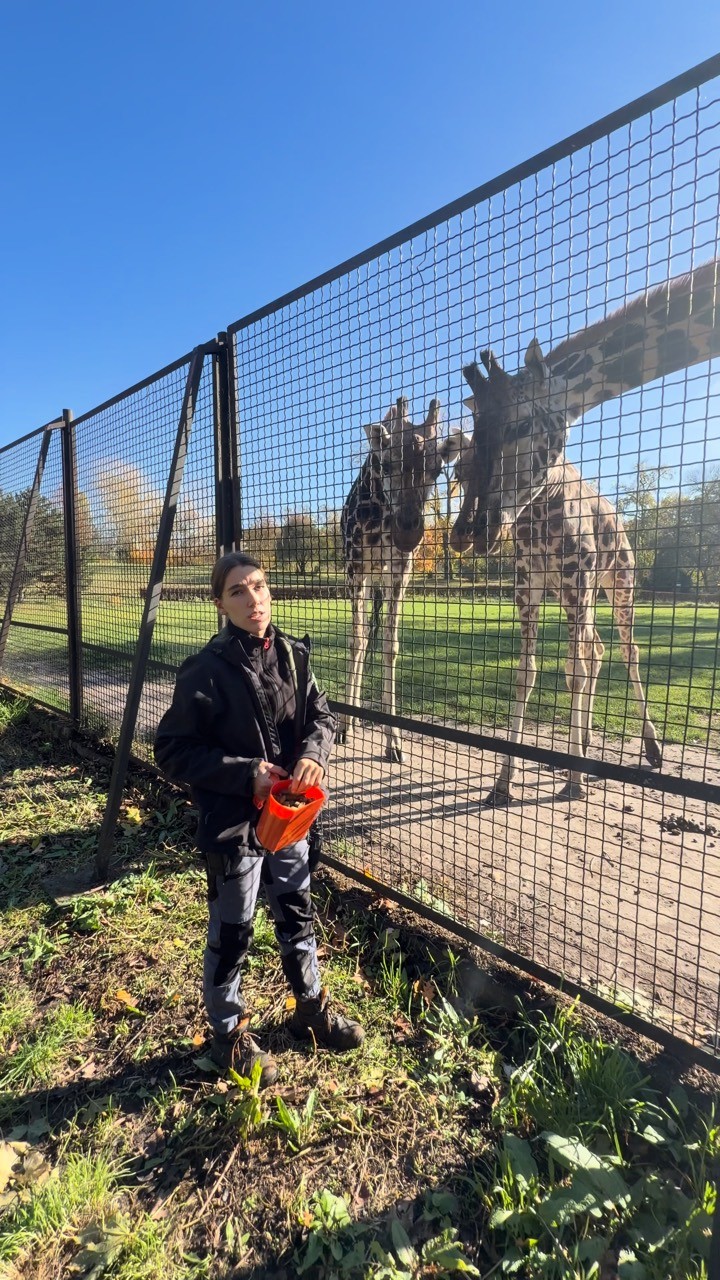
A familiar keeper changes from long trousers into shorts, and the young giraffes react as though something extraordinary has happened. The person is the same. The legs are suddenly different. For the team at Warsaw Zoo, these moments are funny, but they also reveal something useful: earning a giraffe’s trust takes attention to details that people barely notice. During our visit, Karolina Hryciuk, team leader of Warsaw Zoo’s giraffe house, explained how that patience shapes the animals’ lives, from breakfast to the last check of the day.
“You need to be really patient with them,” Karolina says. The conversation moved between affectionate stories and the practical work behind them: finding enough suitable branches, recognising a change in appetite, sharing night shifts with colleagues, and helping a calf become comfortable among other giraffes.
Five giraffes, five ways of meeting the world
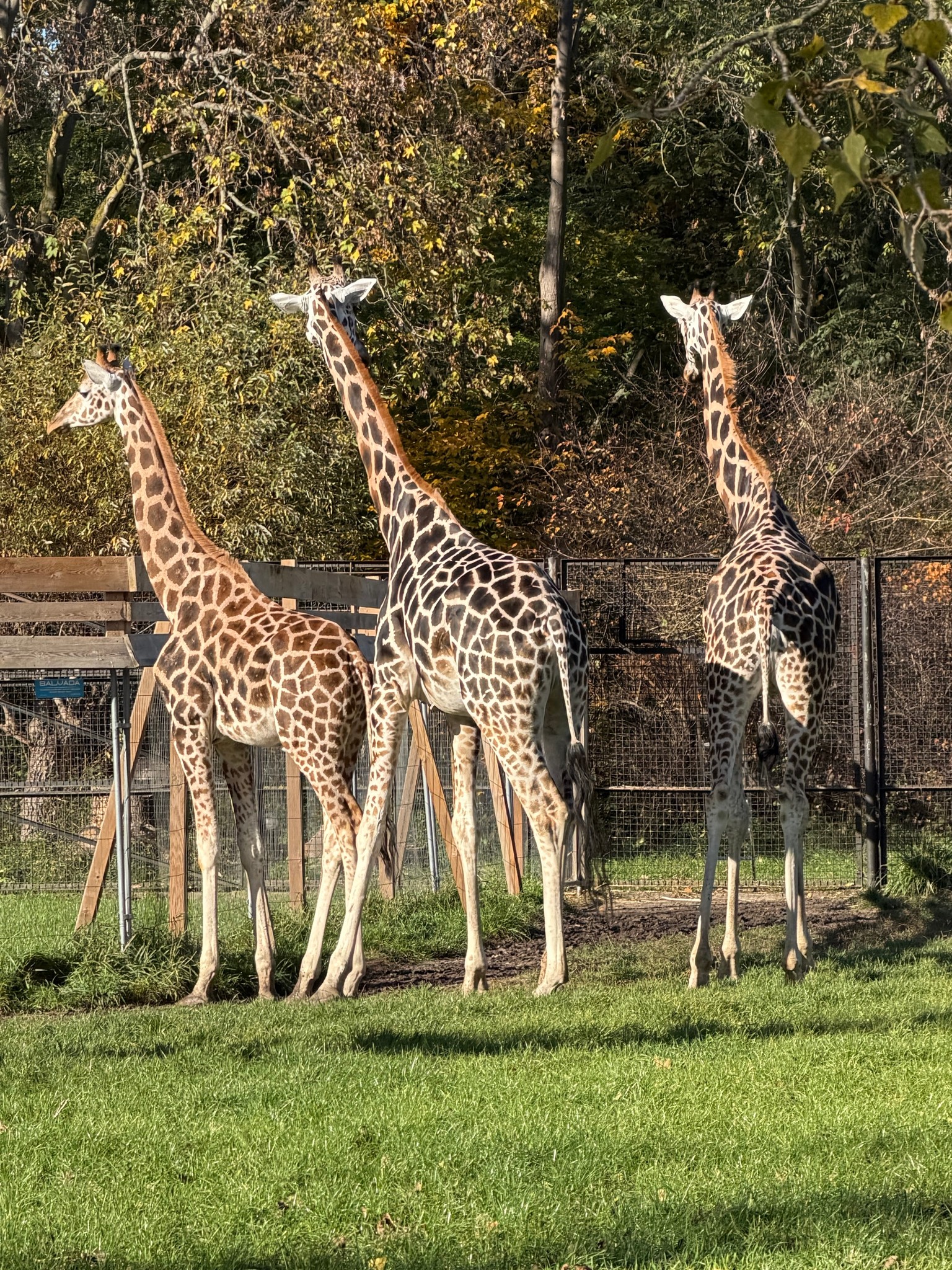
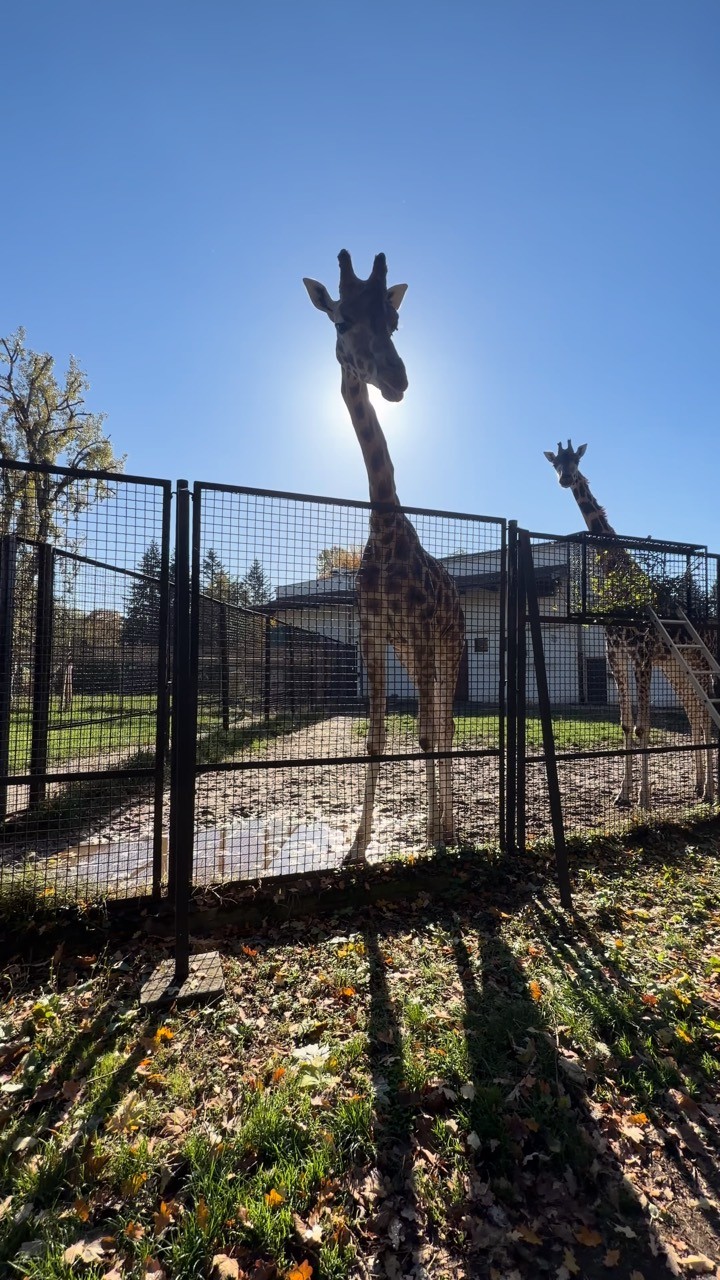
Karolina began by introducing the five animals living in the herd at the time of our interview. Once you know what to look for, their differences become easier to see.
Karim, the adult male, is the tallest and largest, with a lighter pattern of spots. Justyna is the largest of the three adult females and has the longest tail. She came from Prague, while the sisters Anastazja and Malawi came from Liberec, also in the Czech Republic. The sisters are darker and look quite similar; Karolina distinguishes Malawi by her slightly darker colouring and broader ossicones, the horn-like structures on her head.
The youngest and smallest is Pomelo. His particularly charming identifying feature, Karolina told us, is a heart-shaped patch behind his right ear.
Their personalities offer another way to recognise them. “She’s the bravest one, basically,” Karolina says of Malawi, who often takes the lead when something unfamiliar needs investigating. Justyna is more sensitive to people and may stand watching a visitor closely. Learning those differences helps the team decide when to approach, when to wait, and when an animal needs more time.
Karim complicates any simple distinction between brave and shy. Food can make him keen to investigate people, yet when the herd comes indoors he may wait until the others have entered before following. A giraffe can be curious in one situation and cautious in another.
He arrived from Denmark in 2021 as a young male and, in the keeper’s account, settled readily with the females. He has also proved a gentle companion to the calves. Today, Karolina describes Karim and his son Pomelo as best friends.
The day begins at seven
The team starts at around 7 a.m., checking that every animal is safe and well before giving breakfast. Any medication an individual needs is included in the morning routine so the keepers can keep track of it.
Next comes preparation of the outdoor enclosure: a clean-up, fresh food and branches put in place, and a decision about the weather. Training may happen before the giraffes go out. Depending on the procedure, the team works on blood sampling, entering a transport crate or presenting the feet for hoof care. Some sessions take place in the afternoon instead.
These routines create opportunities to see the animals closely. Karolina described looking for scratches or wounds, changes in appetite, and differences in the animals’ droppings. “We know them really well. We know their personalities,” she says. Knowing an individual’s usual manner makes it easier to notice when something is wrong.
An animal that seems a little unlike itself may draw attention before the reason becomes obvious. That is where the daily familiarity pays off: the team has a picture of what is normal for each giraffe, rather than a single expectation for the whole herd.
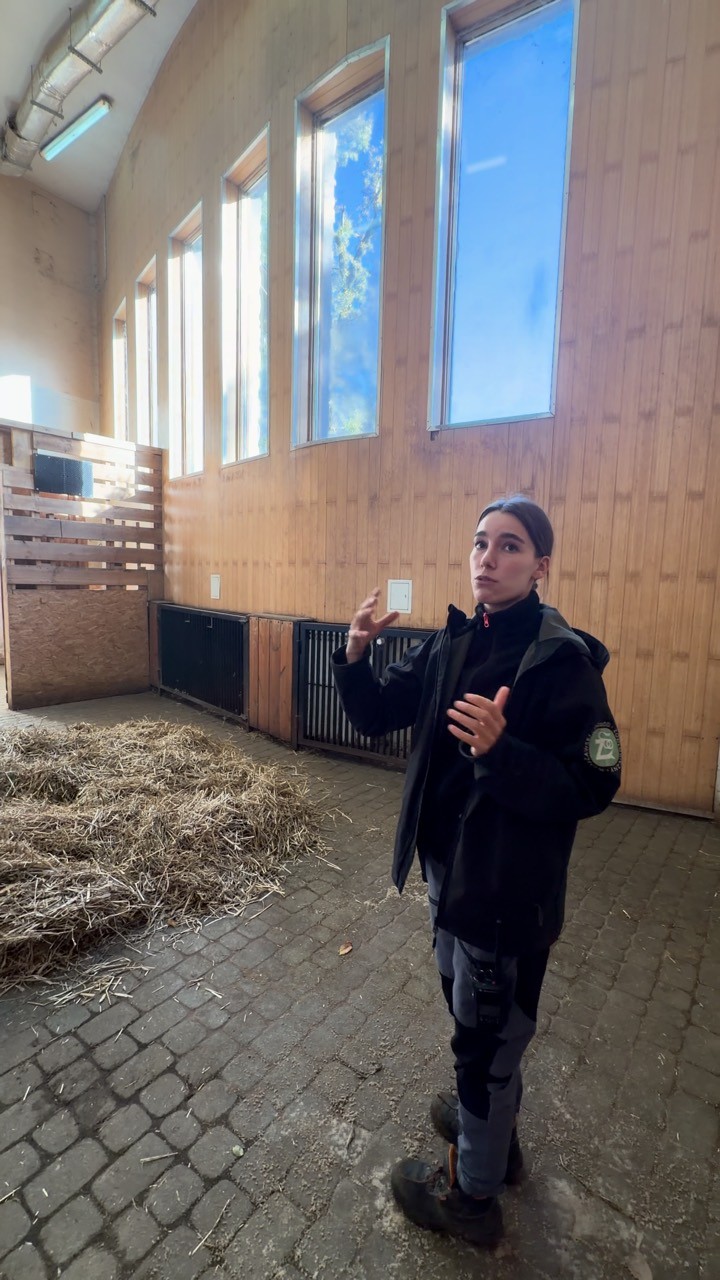
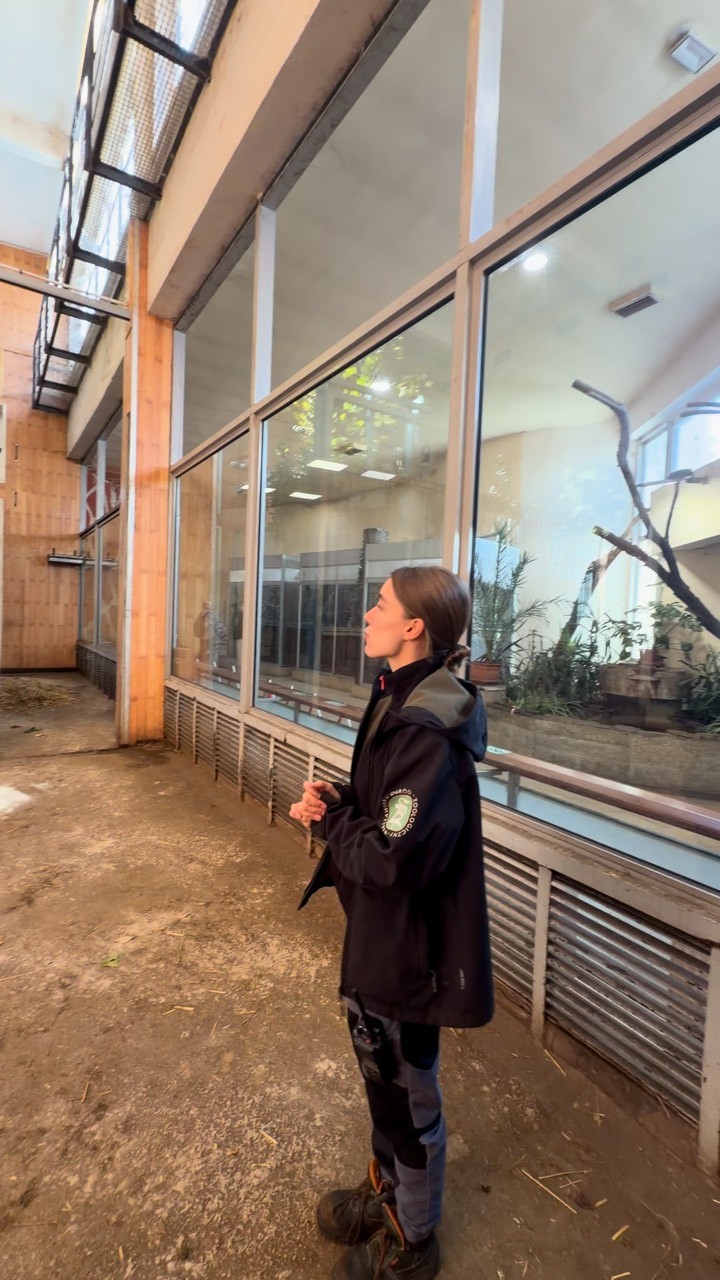
While the animals are outside, the work continues indoors. Stalls need cleaning, afternoon food needs preparing, and browse needs sourcing. Enrichment devices need attention. The keepers also care for other animals, fitting those responsibilities around the giraffes’ changing needs.
Finding the leaves, then making them last
Asked what presents the greatest practical challenge, Karolina returned to food. Giraffes are browsers: they feed mainly on leaves, shoots and twigs from trees and shrubs, rather than grazing on grass. Providing suitable browse—the leafy branches offered to them—is a considerable task in a Polish zoo, especially once winter arrives.
In summer, the team sources fresh branches from outside the zoo and, where suitable material is available, from within its grounds. Willow is a particular favourite of this herd. Plant selection needs care; a plentiful tree is not automatically an appropriate source of feed.
The keeper described alfalfa, also called lucerne, as another important part of the zoo diet. Alfalfa is a leafy legume, not a grass. The team provides it in nets and other feeding devices, with access through the day and night. Fresh alfalfa is delivered in summer. Pellets and herbs add further elements to the feeding routine.
Winter changes what can be supplied. Bare branches still give the giraffes bark to strip and something to work on, but they cannot offer the same leaves as summer browse. The zoo also buys dried browse, although obtaining enough remains a challenge. The keeper spoke appreciatively of the zoo’s efforts to provide what the team needs, while explaining how much organisation the supply requires.
Then there is a second problem: how to make the food last. A generous portion that disappears quickly leaves a different day ahead from food an animal can work through over time.
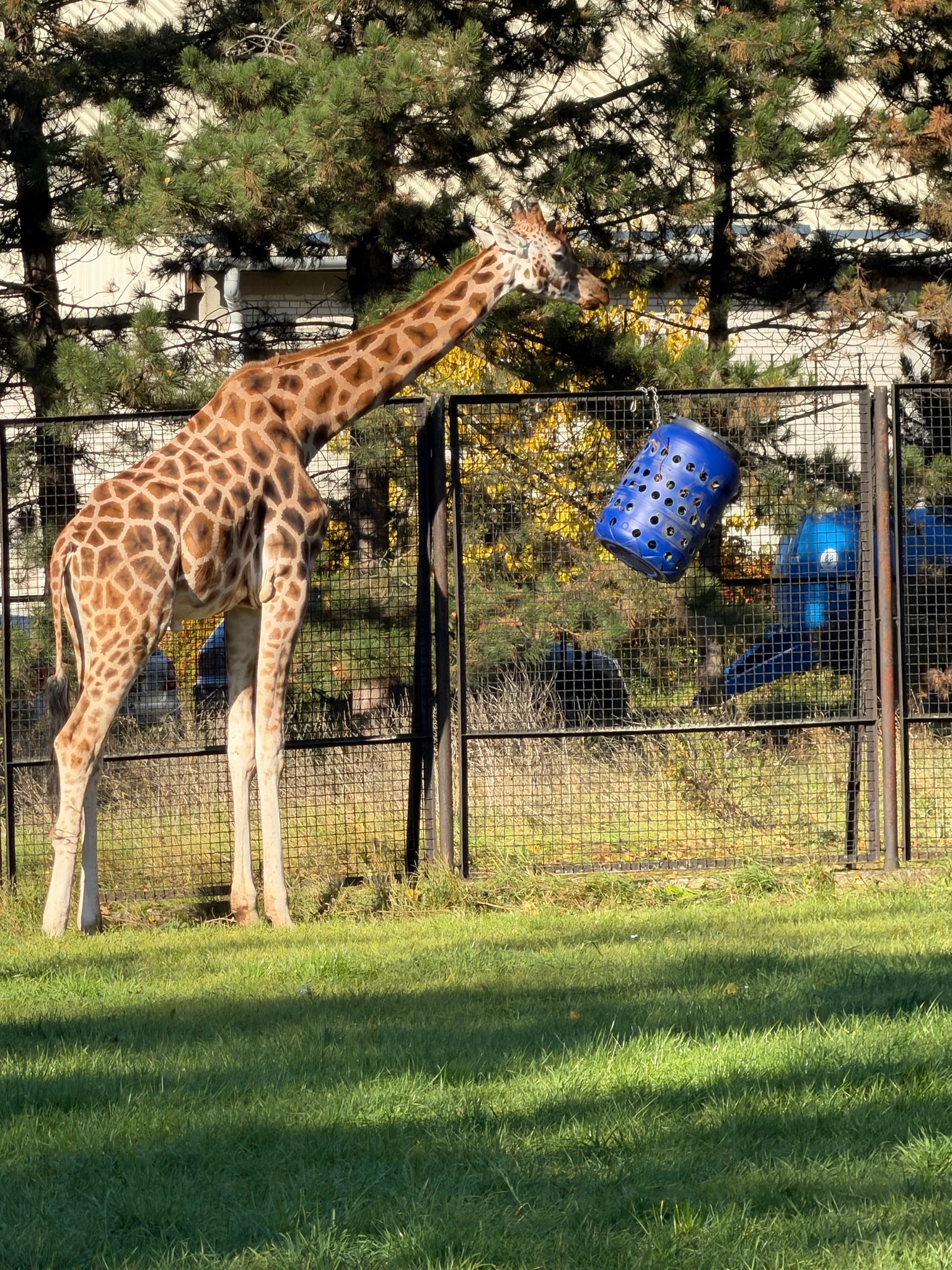
The team has adapted barrels with holes to hold smaller branches, allowing the giraffes to pull material out gradually. Nets and other devices serve a similar purpose. Food is delivered repeatedly, sometimes eight or nine times in a day, alongside the forage already available. The aim is to extend opportunities to feed and keep the animals occupied.
For visitors, this changes the familiar question about feeding time. Asked when the giraffes will be fed, Karolina’s answer is simple: “We try to feed them all of the time.” Our guide to what giraffes eat explains more about the biology behind that routine.
Familiar faces—and unfamiliar shorts
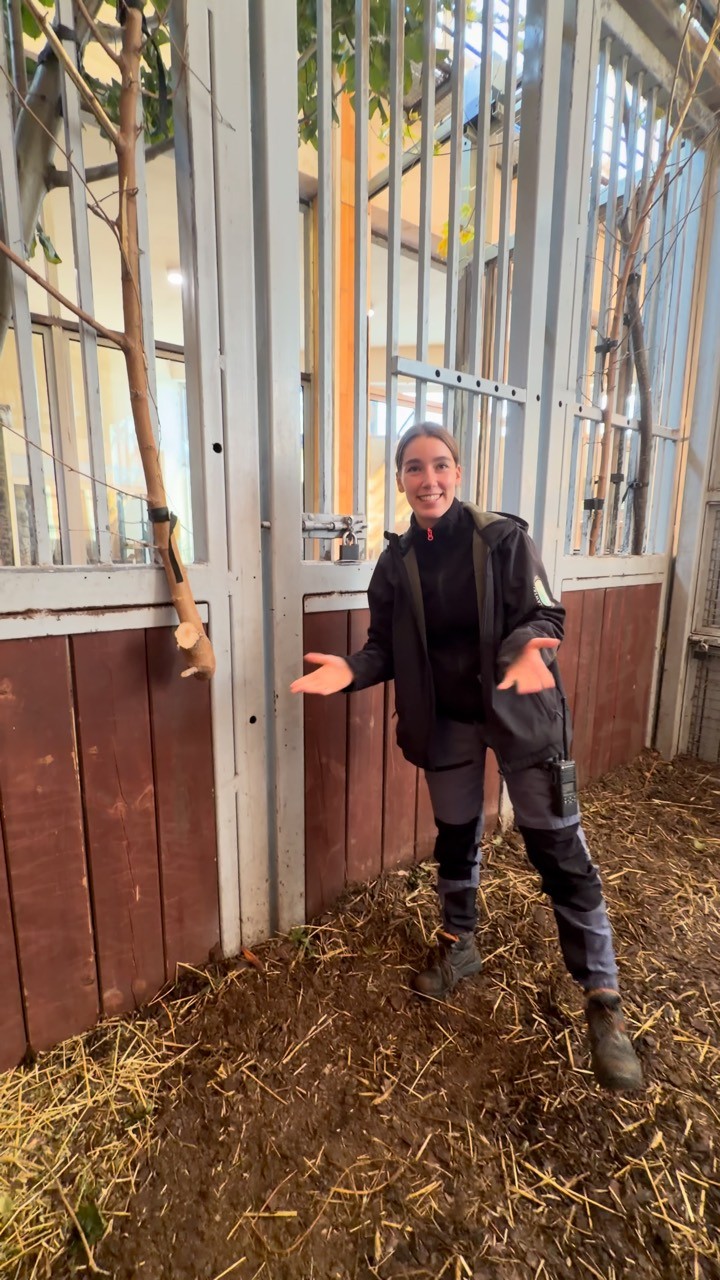
The giraffes recognise their keepers and have favourites, Karolina says. Pomelo responds especially well to her distinctive whistle, alongside the metal whistle used for recall training. It is an endearing bond with a practical complication: colleagues need him to respond reliably when his favourite person is away.
She said he is becoming more responsive to the wider team. Being comfortable with several people matters when care is a shared responsibility.
A new colleague needs time to become familiar to the herd. Even clothing can change the animals’ response. “It’s like a brand new person,” Karolina says of a keeper changing from workwear into ordinary clothes. The first appearance of bare legs beneath shorts was particularly memorable for the young giraffes.
These are the stories the team laughs about, but they also explain the patience the work requires. A small change from a human perspective can be a substantial one to an animal. Karolina described learning to wait rather than expecting confidence on demand.
What the cameras show after visitors leave
Cameras in the stalls let the team observe the giraffes when people are absent, including during the night. They help the keepers follow how the animals rest as well as how they move and feed.
During the day, a giraffe lying down may be resting and ruminating—chewing food brought back up for further processing—rather than sleeping. Karolina regards the animals choosing to lie down outdoors as an encouraging sign that they feel comfortable there. Some do it more often than others, and the calves rest frequently.
At night, the team also sees the distinctive posture in which a giraffe rests with its neck folded back towards its body. Watching the footage helps them check that each animal is settling and resting as expected. The interview offers a view of this particular herd; our giraffe sleep guide explores the wider question.
Winter decisions involve more than a thermometer
Warsaw’s colder months require close judgement. The keeper described paying particular attention below about 10°C, shortening outdoor periods and watching whether the giraffes continue feeding comfortably or appear ready to come in.
Below about 5°C, an outing might be much shorter—around 40 minutes to an hour, if the animals are comfortable. Sunshine, rain, the condition of the ground and the health of the individual all influence the decision. The keeper recalled a period when one female’s illness and weight loss meant extra caution about time outdoors.
Slippery footing is a particular concern. Giraffes need opportunities to move and run, including the exuberant bursts of activity the keeper calls the calves’ “zoomies”. The team has to weigh those opportunities against the conditions underfoot. The temperatures described in our conversation are part of the keeper’s account of local decisions, rather than a rule for every giraffe or every enclosure.
Looking ahead, Karolina would like the herd to have more freedom to move between indoor and outdoor spaces. The team also hopes to explore access to a smaller outdoor paddock on suitable summer nights. These were ambitions discussed during the visit, with animal choice at their centre.
Raising Pietruszka, bottle by bottle
Some of the most demanding work began when Pietruszka needed to be raised by people. Karolina was present at her birth and knew her from the first moments of her life.
The early months required round-the-clock staffing. Colleagues divided the work into 12-hour day and night shifts, initially feeding her about eight times in 24 hours, later reducing that to around six. She remembers the first four to six months as the most difficult period.
There was affection, exhaustion and a strong-willed calf. Visitors from other departments were delighted by the possibility of holding a bottle for a baby giraffe. “It’s cute, but it’s also so tiring,” Karolina says. For the keepers sharing the day and night shifts, delight and exhaustion went hand in hand.
The reward was clear to the keeper: they had helped save a life. But raising a calf also meant looking beyond its next bottle towards the animal it would become.
“We want them to behave as their own species,” Karolina told us.
That principle shaped Pietruszka’s early life. She stayed in close contact with the herd between feeds and joined the other giraffes after a few weeks. The keeper described her acceptance by the group as smooth. Human care was essential, while contact with giraffes gave her opportunities to learn from her own kind.
Having another calf nearby helped. Pomelo was raised by his mother and was initially more cautious around people than Pietruszka. Karolina remembers watching a difference in their feeding skills too: he learned to strip bark from branches sooner, and Pietruszka learned by watching him.
The two calves gave one another companionship, and their contrasting beginnings made those small learning moments especially noticeable. A successful bottle feed was one part of the work; seeing Pietruszka take her place among giraffes was another.
A familiar keeper for a new home
Pietruszka formed a particularly close bond with one colleague, prompting affectionate jokes that he was her mother. When she moved to Ljubljana, that keeper accompanied her for the first days to help her settle.
Ljubljana Zoo’s arrival announcement confirms that she arrived from Warsaw on 22 May 2026. It describes the presence of a familiar keeper and the sharing of information with her new care team. The relationship built during those long months in Warsaw helped provide continuity as she encountered a new place and new people.
For readers who remember her as Warsaw’s bottle-fed calf, that is the next chapter. Her story continued beyond the team that raised her, supported by what they had learned about her along the way.
The choice to step out of view
At the end of our conversation, we asked what would help the team most. Browse came first. Karolina also spoke about giving animals places where they could withdraw from visitors.
“It gives them control, basically,” Karolina says of being able to choose whether to be visible. That is a useful idea for anyone visiting a zoo: an animal stepping out of sight may be using an opportunity that matters to its comfort.
Karolina wants enclosure design to bring the animals’ needs and visitors’ enjoyment together more successfully. The team’s hopes for flexible indoor and outdoor access are part of that same concern. The care described in the interview is attentive to what works today and to what could work better tomorrow.
There is plenty for a visitor to enjoy within that approach: noticing Malawi investigate something unfamiliar, watching Karim wait for the others, or seeing a young giraffe carefully work a branch through a feeder. Those moments become more interesting when we understand the choices and effort behind them.
The next time someone asks when the giraffes will be fed, the answer may change what they look for. Look for food still within reach, for time spent browsing, for rest, and for the freedom to move away. That is the daily life Warsaw’s keepers are working to support—one branch, one observation and one patient introduction at a time.
Sources
This article is based on The Last Giraffe’s interview with Karolina Hryciuk, team leader of Warsaw Zoo’s giraffe house, on 23 October 2026. The conversation has been condensed and arranged by theme. Descriptions of the animals’ personalities, daily care and the team’s aspirations come from that interview.
Warsaw Zoo’s resident profiles provide the public spellings of the animals’ names. Ljubljana Zoo’s 26 May 2026 announcement documents Pietruszka’s arrival. For practical visitor information, see our Warsaw Zoo giraffe guide.
For dietary context, the Giraffe Conservation Foundation’s feeding guide explains browsing, and the University of Minnesota’s forage guide describes alfalfa as a legume.
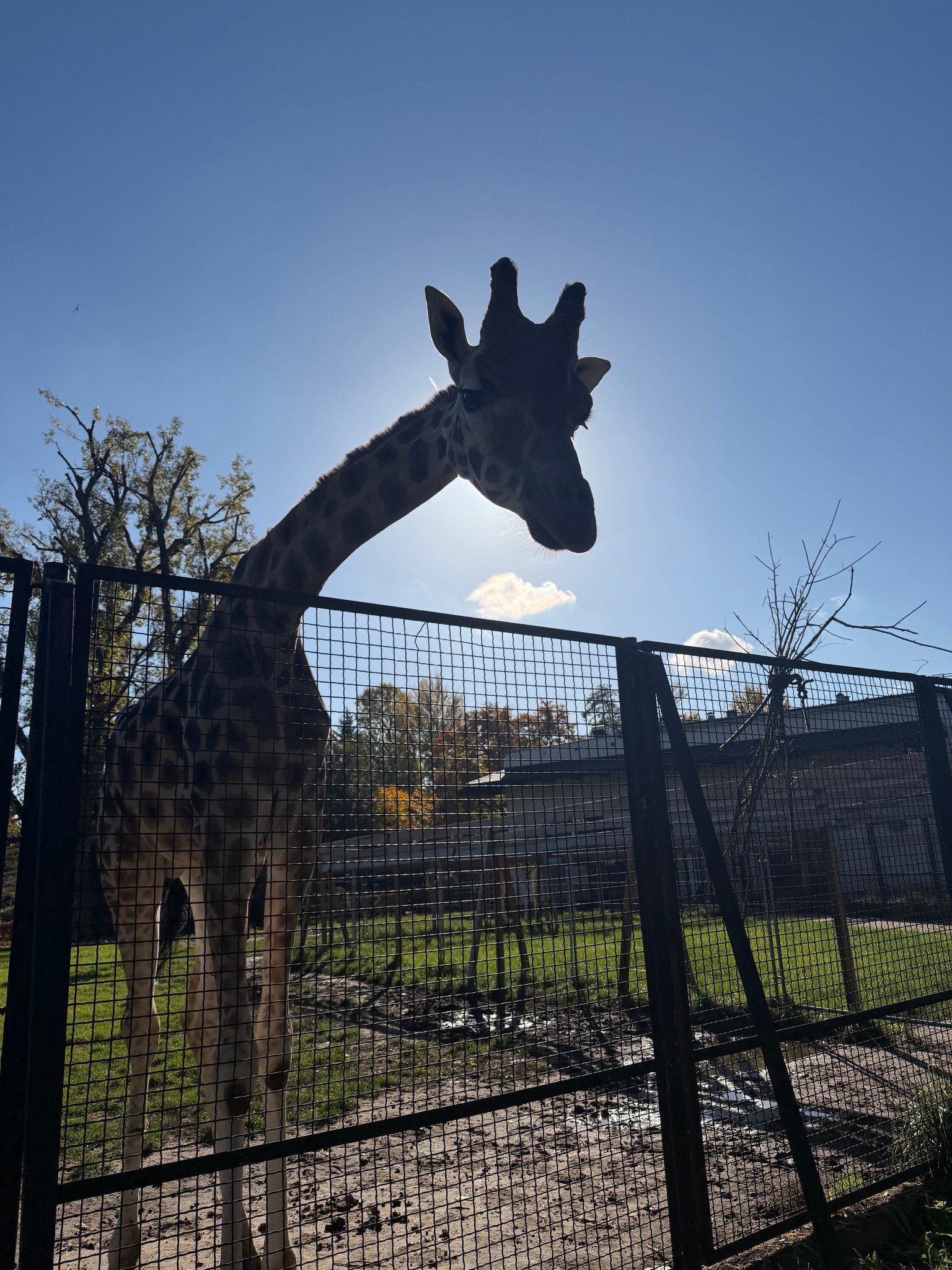
Photographs and video frames by Thiébaut Devergranne, captured during the visit. Images have been resized and compressed for the website; the animals and surroundings have not been altered.