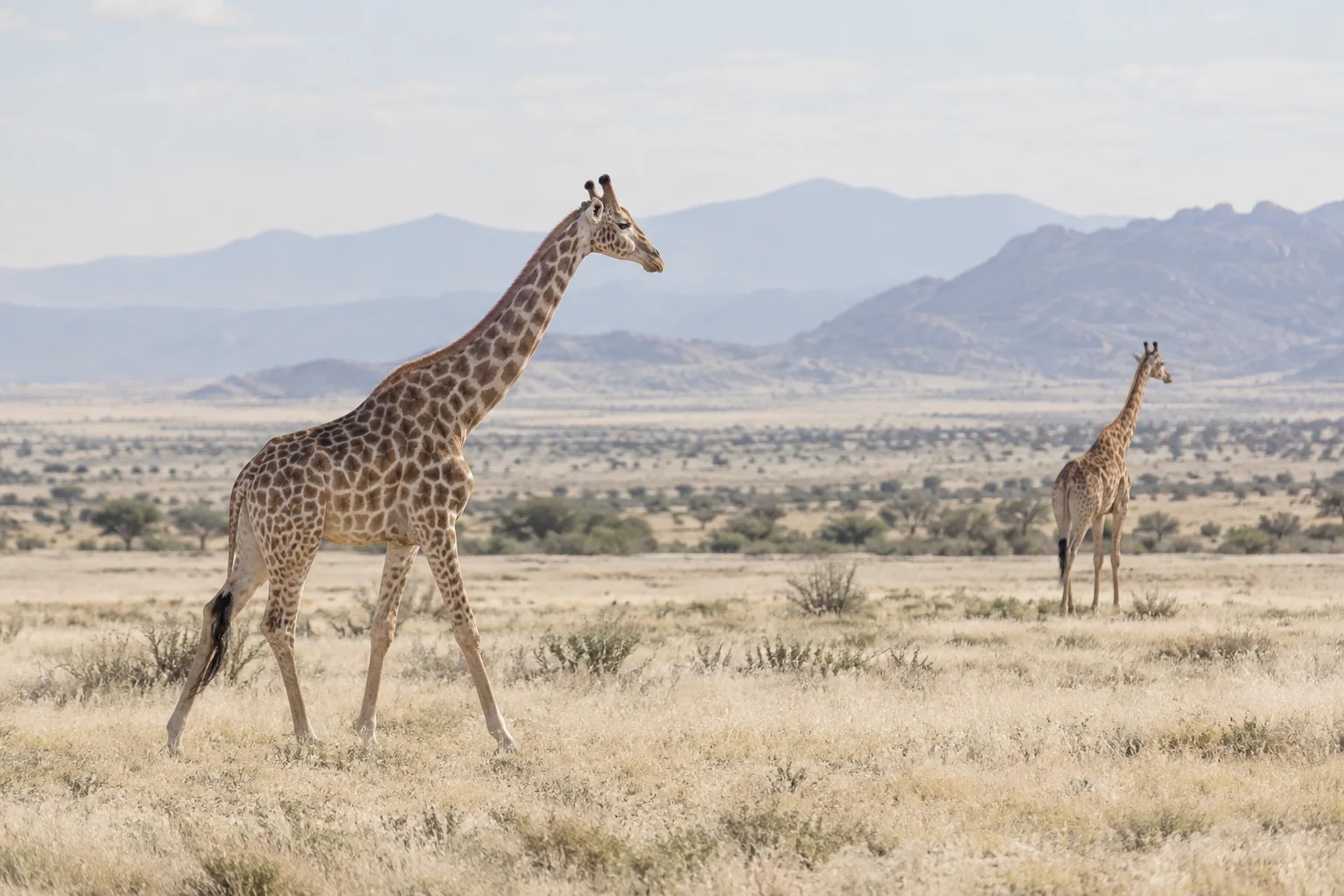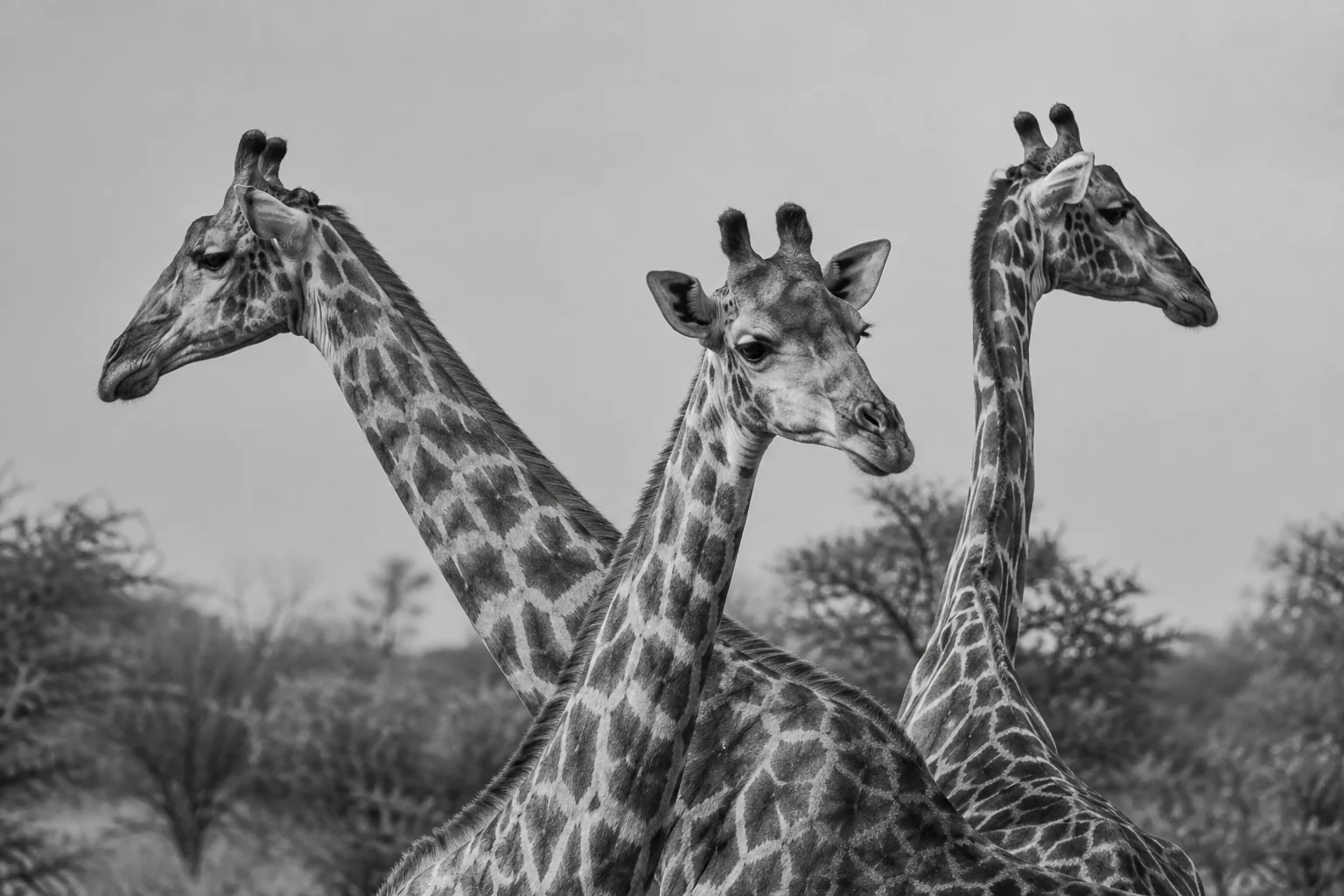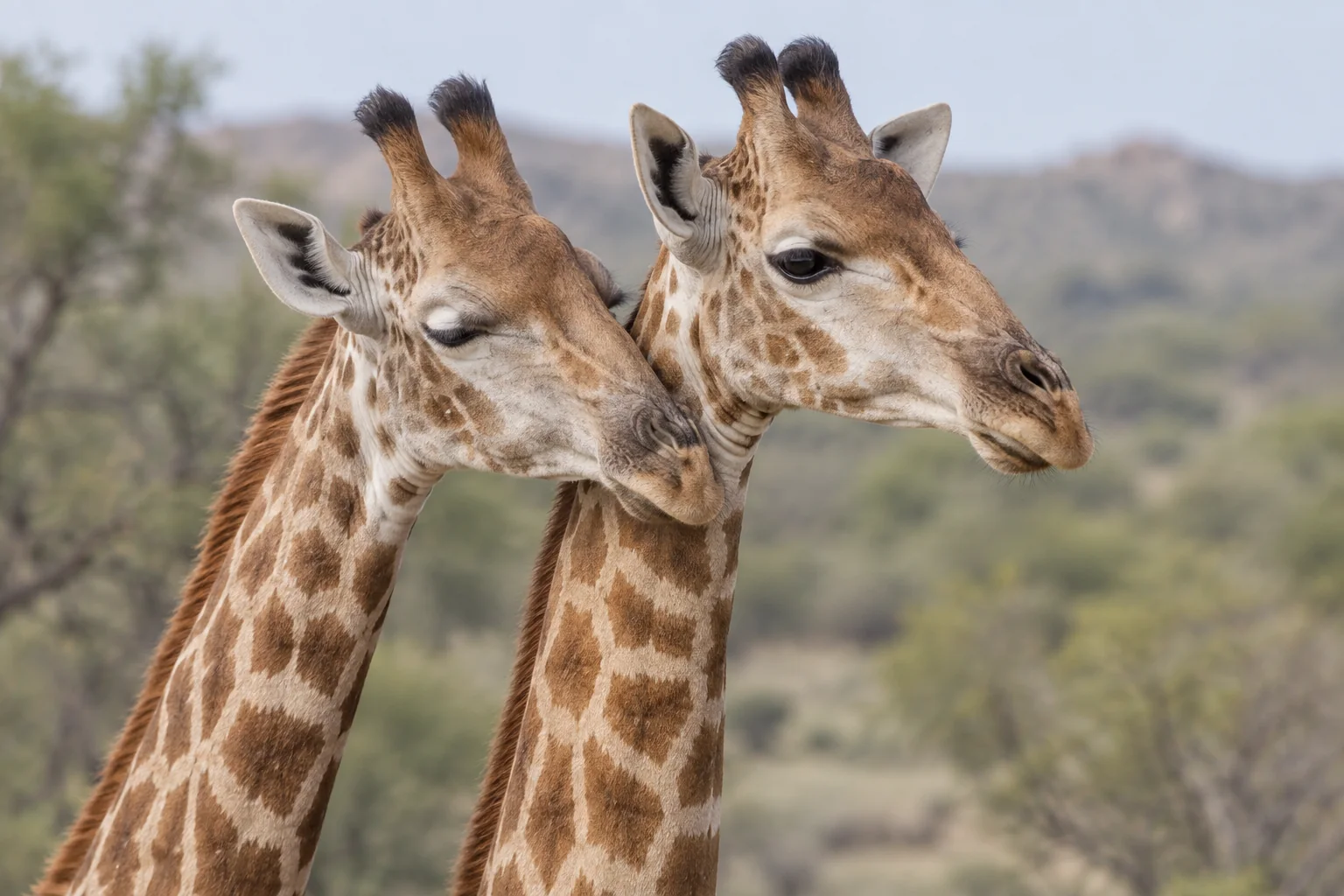
A female giraffe can feed beside one set of animals, leave them and later join others. Such fluid groups pose a question that a single wildlife photograph cannot answer: does a giraffe gain something from her wider circle of company, even when the same companions are not always beside her?
Monica Bond and colleagues connected five years of individual sightings in northern Tanzania to survival estimates. Adult females observed with more other adult females on average had higher estimated survival. Measures of how strong a female’s particular relationships were did not show the same signal. That distinction directs attention towards benefits that might arise from everyday opportunities to feed, move or rest among other females.
The result comes from Sociability increases survival of adult female giraffes, published in 2021 by Bond, Derek Lee, Damien Farine, Arpat Ozgul and Barbara König. Their photographic records let them compare both the company an animal kept and the landscape where she lived. That combination matters: a good feeding area might attract larger groups and also help the animals survive, creating an apparent social benefit that actually begins with habitat.
A changing group can still belong to a society
A single glimpse of giraffes gives little indication of the relationships behind the gathering. Some animals may be frequent associates; others may only occasionally share a feeding patch. When the group breaks apart, those relationships need not disappear.
This is what researchers mean by a fission–fusion society: groups split and join, while longer-lasting associations can persist underneath. It makes the social question especially interesting. If membership changes repeatedly, does survival relate to having particularly strong relationships, to spending time among more females, or to belonging to a particular community?
Bond and her colleagues could separate those possibilities because they recognised individuals from their distinctive coat patterns. From January 2012 to October 2016, they carried out 30 photographic surveys along fixed road routes in the Tarangire Ecosystem. Repeated sightings recorded both where a female was and which other females were with her.
The surrounding landscape varied from protected areas to land used by people and livestock. The team recorded the vegetation, preferred food plants and proximity to settlements associated with each female’s sightings. Comparing these features alongside social measures helped them ask whether company was informative even when the measured habitat differences were considered.
The signal was in everyday company
For every pair of females, the researchers calculated how regularly they appeared in the same group. A pair repeatedly photographed together had a stronger recorded association than a pair seldom seen together. Combining those records created a social network: a map of recurring associations rather than geographical paths.
One measure stood out. Gregariousness represented the number of other adult females an individual was observed with on average, calculated from her weighted associations. Females with higher values had higher estimated seasonal apparent survival. The measured strength of a female's average or strongest relationship, and how exclusively she concentrated her associations, did not show significant survival effects in the main results.
The distinction points towards benefits potentially available through a wider circle of company, even without an especially strong bond to one partner. But the surveys captured only occasional views of each female’s social life. The authors suggest that more intensive observations could reveal important relationships with particular partners that this broad survey could not resolve.
The fitted survival curve rose towards roughly three other females and then flattened. In other words, the clearest difference lay between females with relatively little company and those around the sample’s average level of company. This measure combines changing associations over time; three is not a tested group-size prescription.
Among the explanations examined, gregariousness had stronger support than the measured vegetation and settlement variables. There was also weaker support for higher apparent survival farther from towns. That comparison concerns the variables and animals in this study; it does not mean social contact can compensate for habitat loss or other threats.
Following an animal means allowing for missed sightings
A giraffe can be alive without appearing in the next photograph. It may be outside the surveyed area or simply missed along the route. Females in larger groups may also be easier to spot. To address those problems, the researchers used repeated encounters to estimate the probabilities of detection, temporary absence and survival together. They explicitly allowed detection to vary with gregariousness.
The resulting apparent survival is the estimated chance that an animal survives and remains in the study system. A permanent departure can look like a death in the record, even when temporary absences are accounted for. The result therefore cannot be translated into confirmed causes of death or extra years of life.
To describe social habits reasonably well, the team needed repeated sightings of each female. The final sample contained 512 females in ten communities, all seen at least six times. Selecting frequently observed animals probably raises the overall survival estimate, as the authors acknowledge. The useful finding is the difference associated with company within this sample; the absolute survival level does not represent every giraffe in Tarangire.
These design choices made a difficult field question approachable: how to compare animals' social lives without mistaking every missed encounter for a death. Our population-survey methods guide explains the wider use of repeated photographic encounters.
What might company offer a browsing giraffe?
Food provides one plausible connection. Suitable browse is scattered across the landscape and changes with the season. Other females' movements and feeding choices could offer information about where to look. If that information reduced searching or improved access to food, its benefits could accumulate across months.
The authors also discuss reduced harassment by males, care around young and the possibility that familiar company helps buffer stress. These are proposed explanations, not behaviours or physiological pathways measured as the cause of the survival difference. The analysis counted adult female associations; it did not capture every potential contribution from males or younger animals.
A different explanation could begin with the female herself. An animal already in poor condition might spend less time with others and also be more likely to disappear. Reproductive state or habitat use could affect both grouping and survival. Repeated measures of condition and behaviour would help distinguish those possibilities from a benefit flowing from company to survival.
Because these animals were observed rather than assigned companions, the direction of the relationship remains unresolved. The next step is to connect company to changes in a female’s daily life: does she find food more efficiently, experience less harassment, or begin to spend less time with others as her condition deteriorates? Each possibility would give the same broad association a different biological meaning.
Social lives meet the conservation landscape
Other analyses from the same Tarangire field project connect this individual pattern to social communities and population change. Their observation periods overlap with the survival study, so they add different questions about the same system rather than independent confirmation from a new population.
In a study of female social communities, Bond and colleagues analysed sightings from 2011–2016. Communities closer to traditional pastoralist compounds, called bomas, had weaker average associations, with stronger relationships concentrated among fewer partners. The study did not find a discernible effect of distance to towns on those social measures. That difference matters because bomas and towns represent different kinds of human presence.
A landscape used by people may therefore shape opportunities to associate as well as access to food and space. But the relationship measures associated with bomas were not the same social measure most clearly linked to survival. Connecting these findings requires following how disturbance changes a female’s actual company and what happens to her afterwards; the two analyses do not establish a chain from settlements to disrupted relationships to death.
An earlier demographic study led by Derek Lee followed adult females and calves across five Tarangire sites in 2012–2014. Differences in adult female survival contributed most to the modelled differences in local population growth. A surviving female remains part of the breeding population and can have further calves. This explains why the survival association matters beyond the fortunes of one animal: whatever influences adult females can also affect a population’s future.
The practical implication is to include social observations when investigating why females fare differently across a landscape. Recording who uses a feeding area together could reveal a consequence of habitat access or disturbance that vegetation maps alone would miss. The work provides a reason to examine that possibility, rather than evidence that putting more giraffes together would improve survival.
Where the finding could lead
The link between company and survival opens up several questions.
Does company come before better prospects? Measure associations in an initial period, then examine subsequent survival while following body condition and reproductive state. That sequence could help distinguish a benefit of company from reduced sociability during an existing decline.
What changes during a day spent with others? Compare feeding success, vigilance and harassment among females sharing similar habitat and seasons but experiencing different amounts of company. Those observations could identify which everyday experiences plausibly connect grouping to longer-term outcomes.
Do changes in social opportunity change the pattern? Following known females as habitat access or disturbance changes could reveal whether associations and later survival move together. Accounting for simultaneous changes in food and exposure would be essential: a changing landscape affects many things at once.
Sources
- Bond, M. L., Lee, D. E., Farine, D. R., Ozgul, A. & König, B. (2021). Sociability increases survival of adult female giraffes. Proceedings of the Royal Society B: Biological Sciences, 288(1944), 20202770. DOI: 10.1098/rspb.2020.2770. Author-hosted published article.
- Bond, M. L., König, B., Lee, D. E., Ozgul, A. & Farine, D. R. (2021). Proximity to humans affects local social structure in a giraffe metapopulation. Journal of Animal Ecology, 90, 212–221. DOI: 10.1111/1365-2656.13247. First published online in 2020. Author-hosted full paper.
- Lee, D. E., Bond, M. L., Kissui, B. M., Kiwango, Y. A. & Bolger, D. T. (2016). Spatial variation in giraffe demography: a test of 2 paradigms. Journal of Mammalogy, 97(4), 1015–1025. DOI: 10.1093/jmammal/gyw086. Author-hosted full paper.