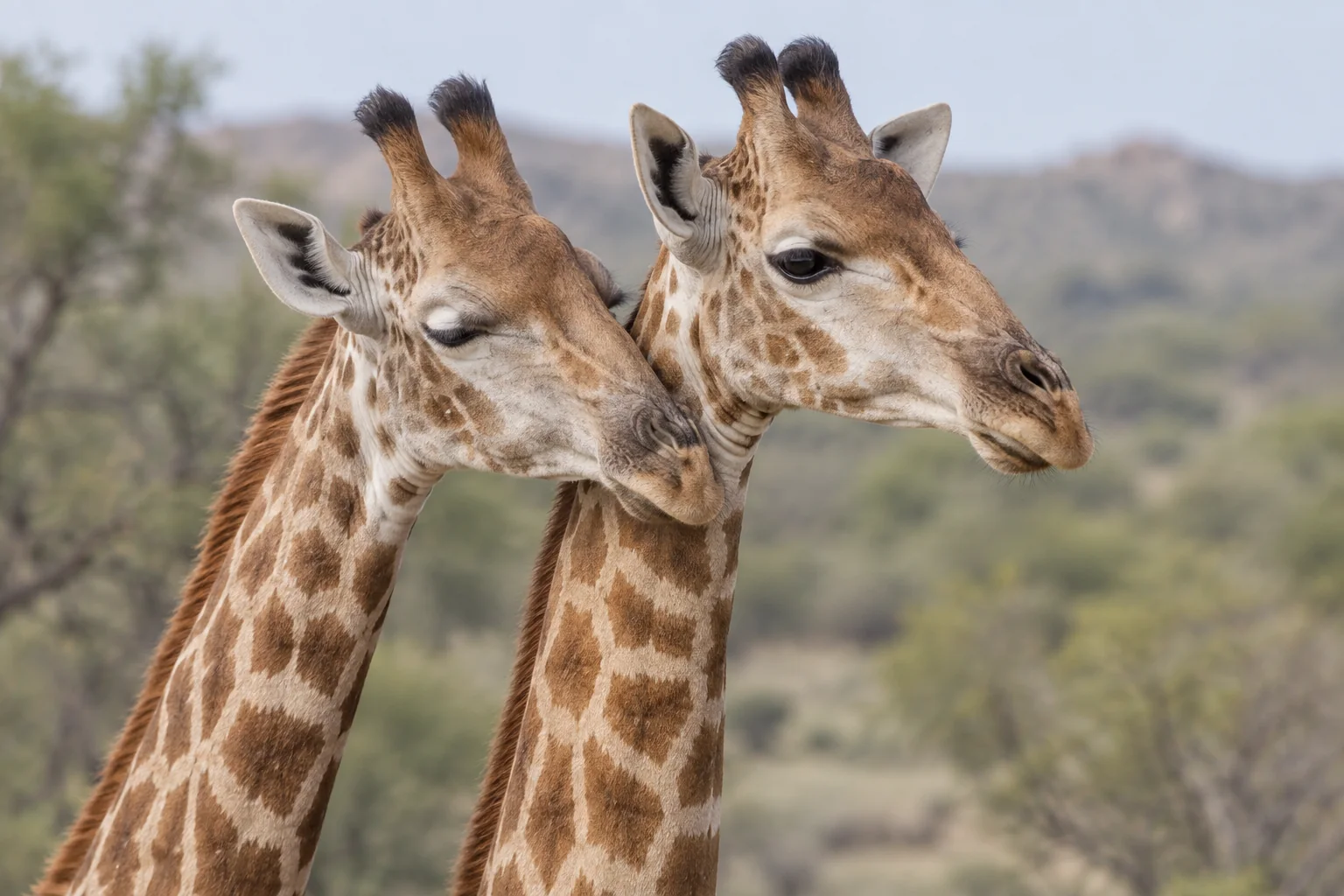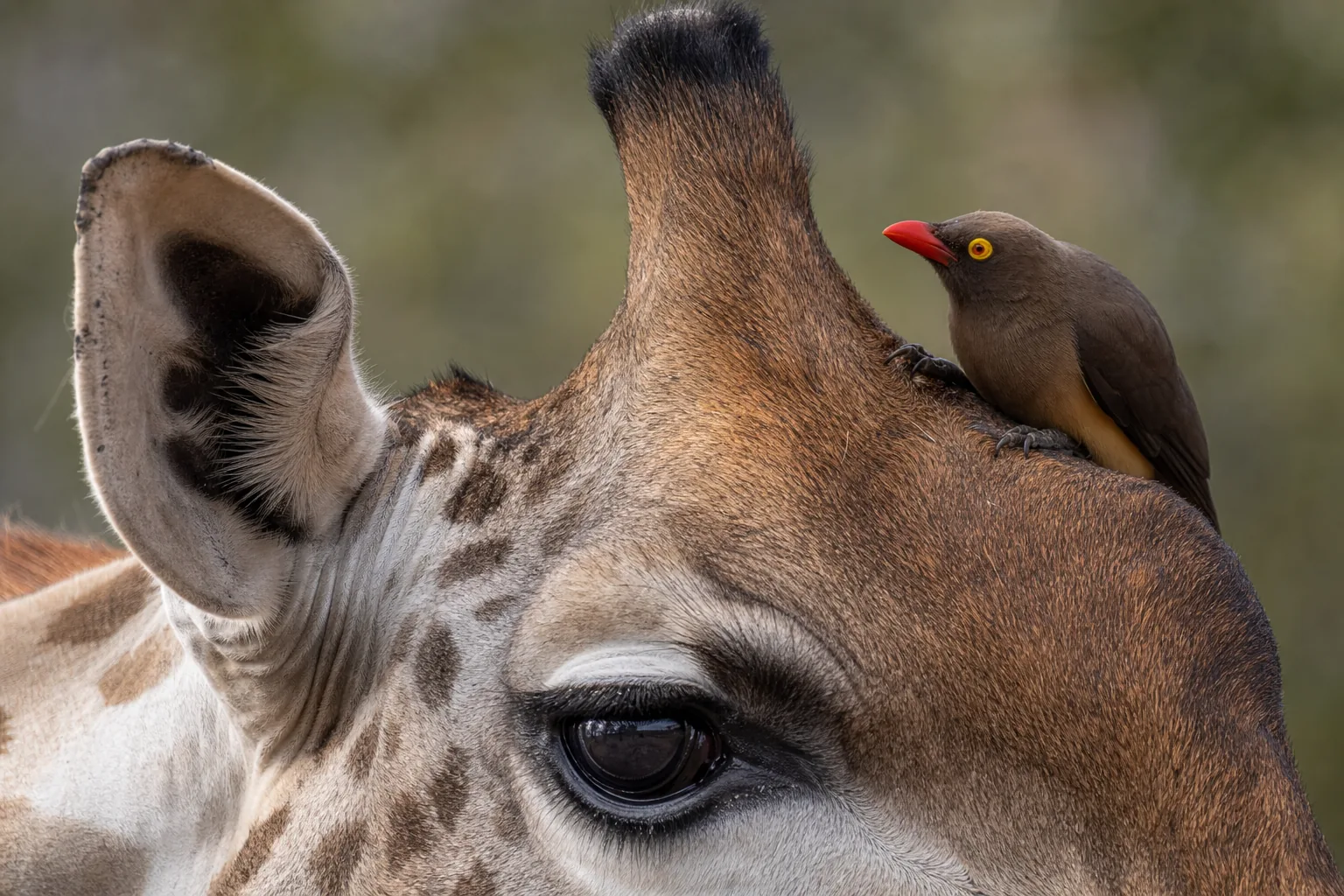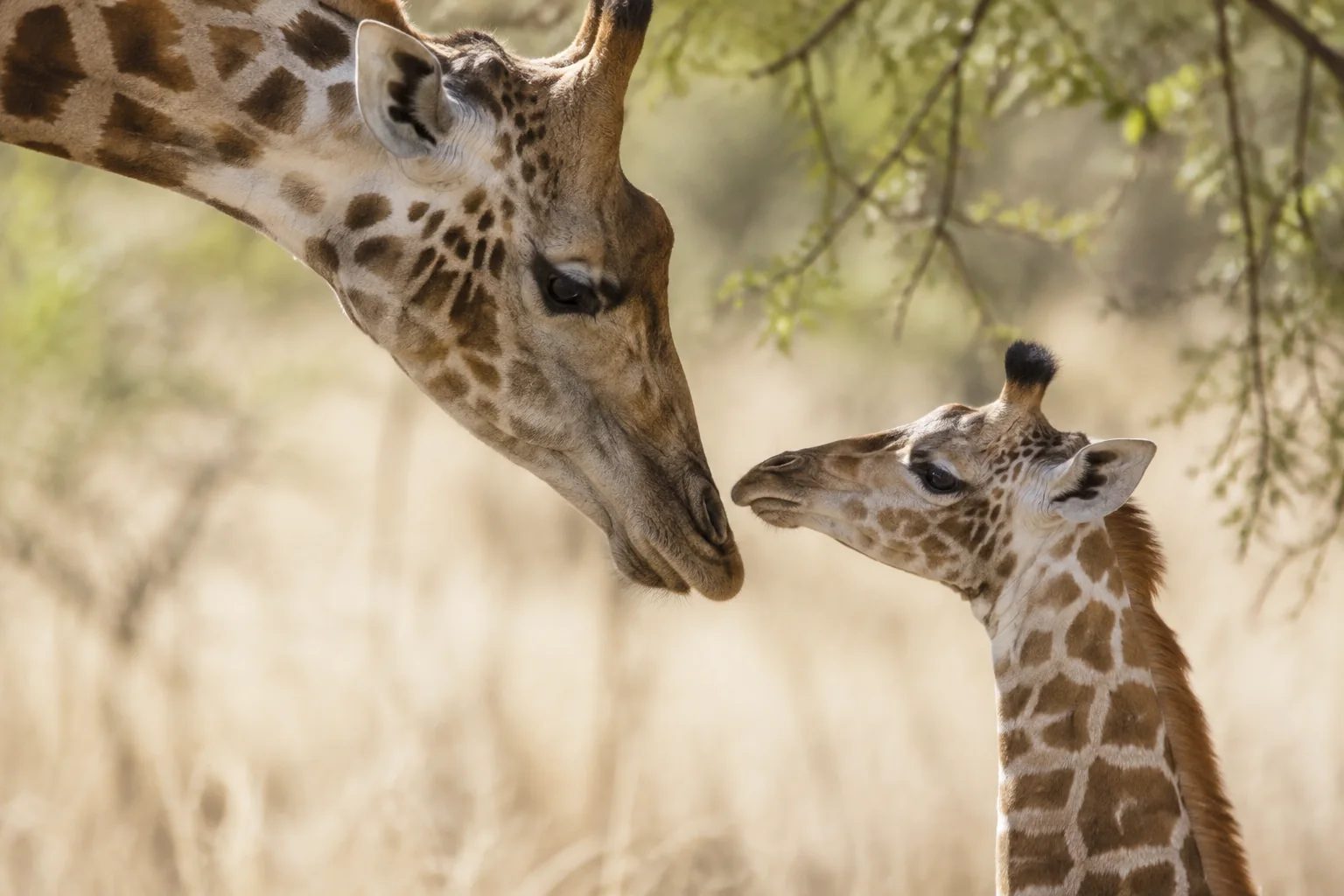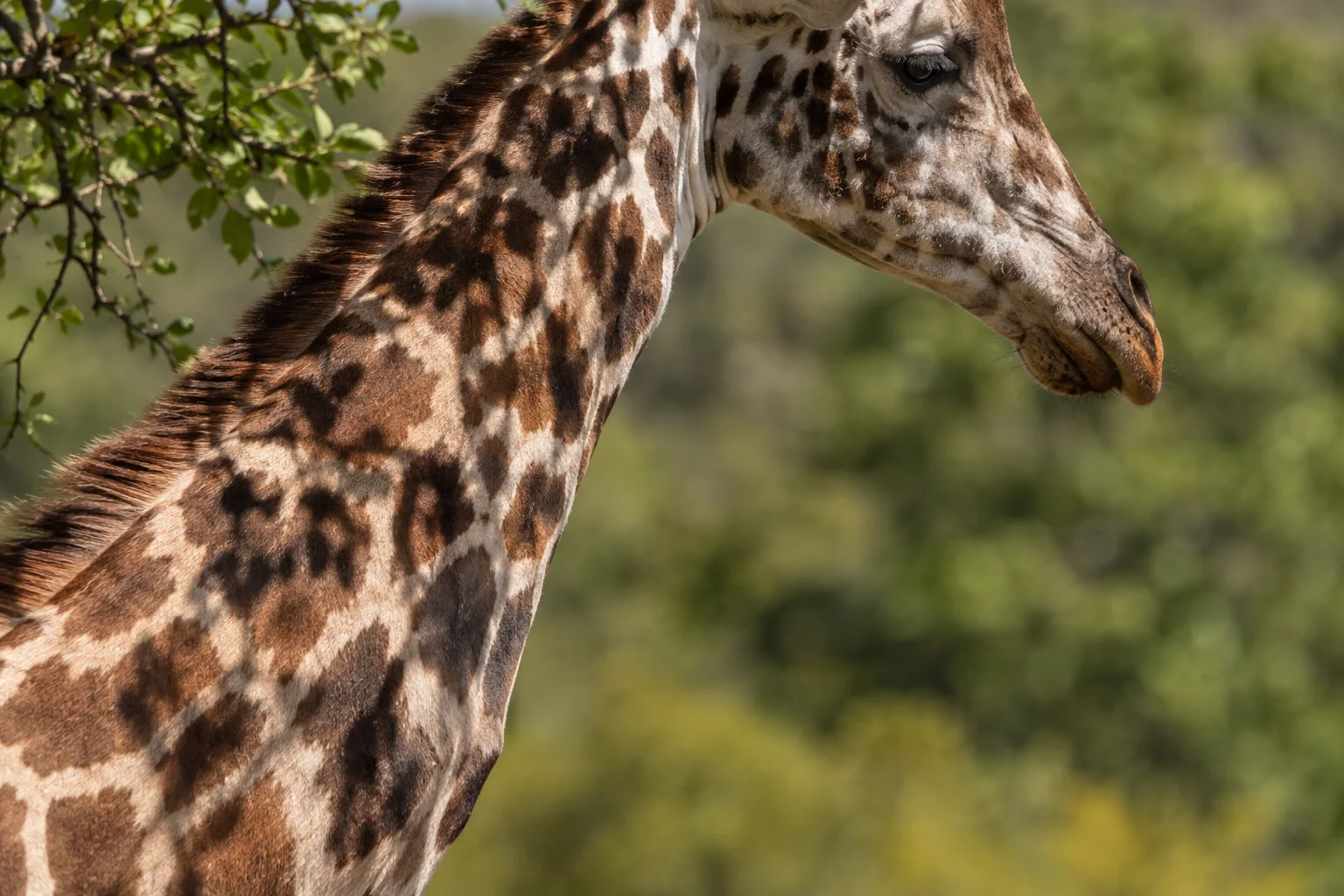
Researchers recognise giraffes by their spots. Could giraffes also use the patterns to recognise one another—or to decide whom to spend time with? The idea is attractive because it connects an obvious physical feature with a less visible part of giraffe life: relationships that persist while temporary groups repeatedly split and re-form.
Kin Morandi and colleagues approached the question by combining two kinds of evidence from 399 adult female Masai giraffes. Photographs supplied measurements of spot geometry; seven years of sightings supplied a social network. Females with similar spot shapes had slightly stronger associations than expected in randomized networks. Spot size and orientation did not show the same result. The 2022 paper provides a clue about recognition, while leaving the recognition mechanism itself unresolved.
Turning a coat into comparable measurements
The challenge starts with what “similar spots” should mean. Two coats might share large patches but differ greatly in whether those patches are rounded, elongated or deeply indented. A researcher’s impression that two giraffes look alike would mix these properties together.
The team used photographs from a long-running study in the Tarangire ecosystem of Tanzania. They selected females first observed as adults in the initial study year, seen at least six times, and represented by a sufficiently clear photograph. Images obscured by vegetation or birds, or taken from unsuitable angles, could not provide a reliable measurement.
For each animal, researchers selected a comparable rectangular area on the right side of the body. They measured ten features of the complete spots inside that area, including size, perimeter, roundness and orientation. Measurements were scaled to the photographed body region so that a larger image did not automatically create an apparently larger spot.
Repeat measurements from separate photographs of 40 individuals were generally consistent. That check matters because an association between coats and social ties would mean little if the apparent coat differences were mostly camera effects.
Several measurements described overlapping properties. A statistical summary therefore grouped the main variation into three dimensions: size, shape and orientation. In the paper’s photographic examples, the shape dimension runs from more elongated, irregular-looking spots toward rounder ones. This is the dimension that later showed the social association.
Comparing coats with the company females kept
The social records came from 42 surveys between 2012 and 2018. Each female appeared in the data between six and 31 times. Researchers recorded which giraffes were moving or feeding together and used repeated co-occurrence to quantify the strength of association between pairs.
This is a measure of being found together, not a direct inventory of affection, grooming or cooperation. It is still useful for a species whose group membership changes: repeated encounters can reveal preferences that would be invisible in any one group photograph.
The analysis asked whether pairs with similar coat measurements had stronger ties. To judge the result, the researchers shuffled individuals among observed groups within survey periods and recalculated the network repeatedly. Those randomized versions retained constraints such as group size and when giraffes were observed, providing a comparison against which to assess the real pattern.
The observed network showed a small positive association for spot shape. Its assortativity coefficient was 0.032, close to zero on a scale in which strongly positive values would indicate much greater sorting by similarity. The randomization probability was 0.049, just below the conventional 0.05 threshold. This is evidence of a modest pattern, not a sharp division into separate communities of round-spotted and elongated-spotted females.
The absence of comparable support for size or orientation narrows the result. “Giraffes with matching coats become friends” would imply a broader and more decisive finding than the analysis provides.
Recognition is one explanation, not an observed act
One possibility is that coat shape helps females recognise familiar individuals or relatives. If a visual feature carries useful information about another animal, responding to it could make regrouping easier after animals separate.
But another explanation can produce the same statistical pattern without giraffes choosing companions by inspecting spots. If relatives resemble one another and remain associated through familiarity, their coats and relationships would correlate even if scent, past experience or some other cue governed recognition. Shared environments and opportunities to meet can also contribute to association patterns.
The focal study did not change a giraffe’s appearance, present it with controlled images of familiar and unfamiliar animals, or measure genetic relatedness across these pairs. It therefore cannot distinguish direct visual matching from resemblance that accompanies relationships formed for other reasons. The proposed role of spots is a testable interpretation of the association.
A separate dispersal analysis, using young giraffes from the same wider field programme, helps explain why stable social histories are relevant. Most females in that sample remained associated with their original adult female community, although some changed communities. That finding establishes an opportunity for familiar relationships to persist. It does not show that coat patterns maintain them, and the shared study setting means it should not be presented as an independent replication of the spot result.
A useful clue because it makes the next question clearer
The study’s contribution is to move an appealing visual idea into measurable territory. It identifies a particular property—shape rather than every aspect of appearance—and demonstrates that its connection with association is small enough to demand careful follow-up.
An experiment that separates familiarity from appearance would address a different question from this observational survey. For example, responses to controlled visual information could test whether coat cues contribute to recognition at all. Genetic data alongside social records could help determine whether kinship explains the association. Neither result can be assumed in advance.
For now, spots are proven tools for the human researchers who track individual giraffes. The possibility that the animals also use them socially remains plausible, with a weak but specific field association to investigate. The distinction between those two claims is where the scientific interest lies.
Sources
- Kin Morandi, Anna K. Lindholm, Derek E. Lee and Monica L. Bond (2022). “Phenotypic matching by spot pattern potentially mediates female giraffe social associations.” Journal of Zoology 318, 147–157. Full paper.
- Monica L. Bond, Derek E. Lee, Arpat Ozgul, Damien R. Farine and Barbara König (2021). “Leaving by staying: Social dispersal in giraffes.” Journal of Animal Ecology 90, 2755–2766. Related study.