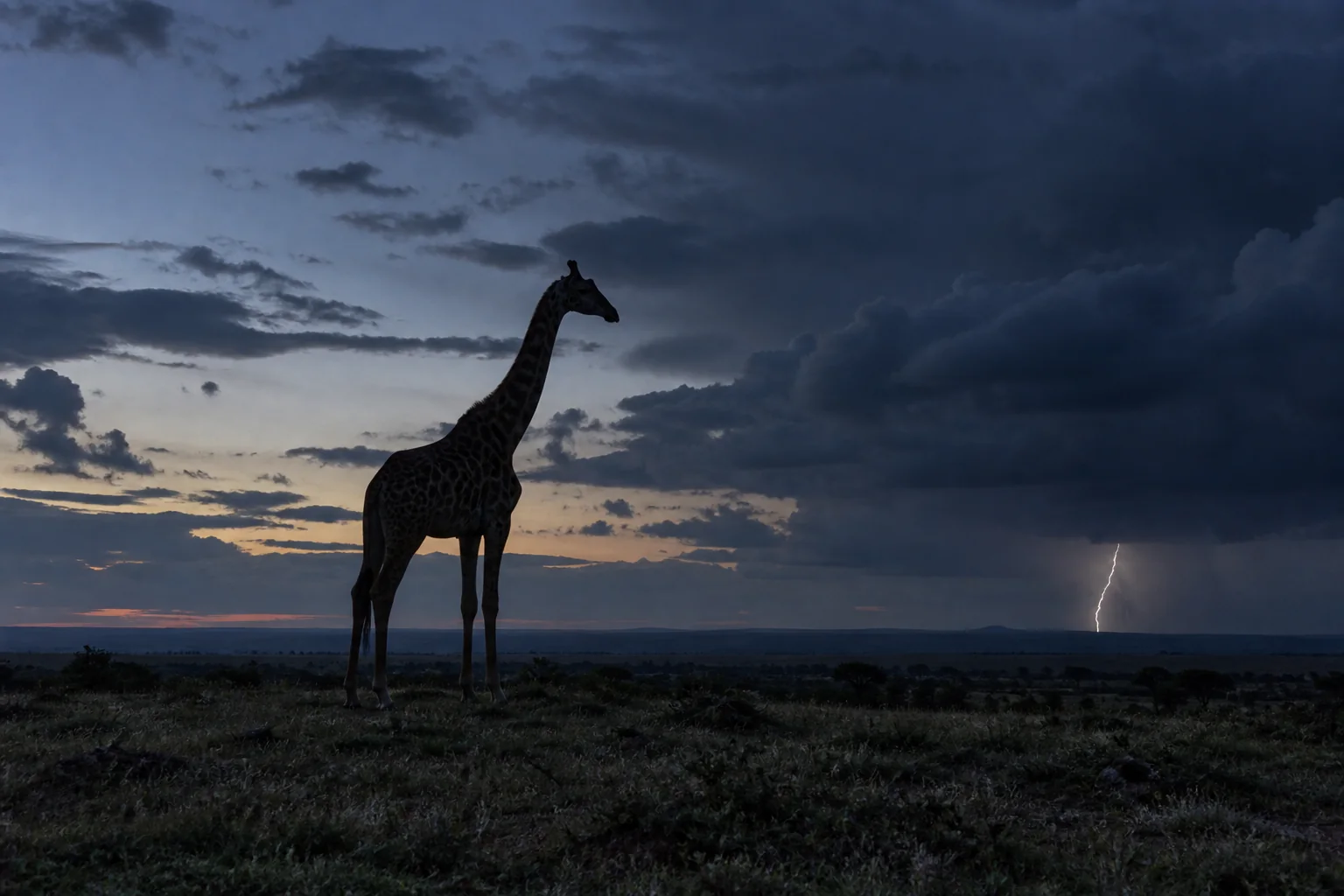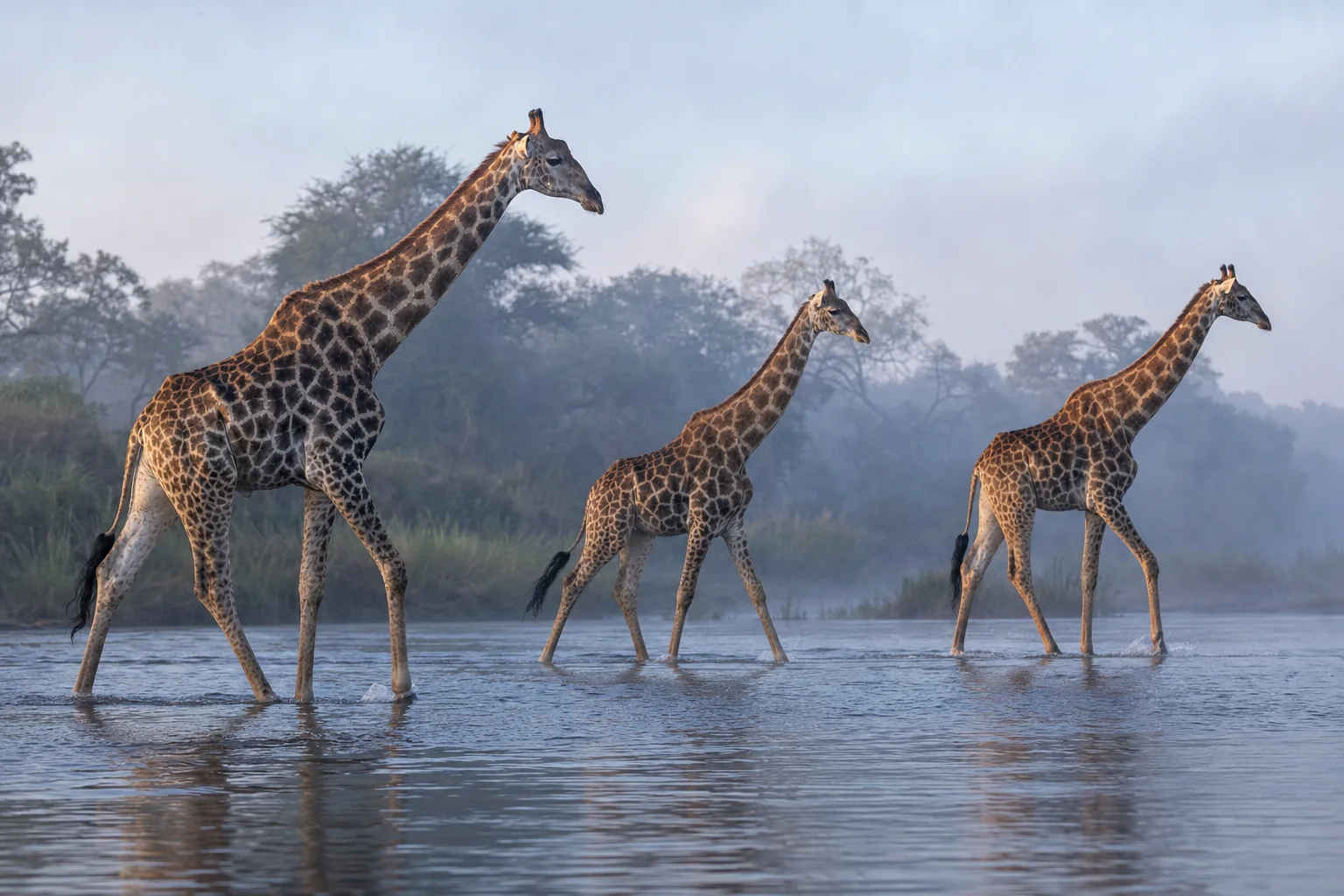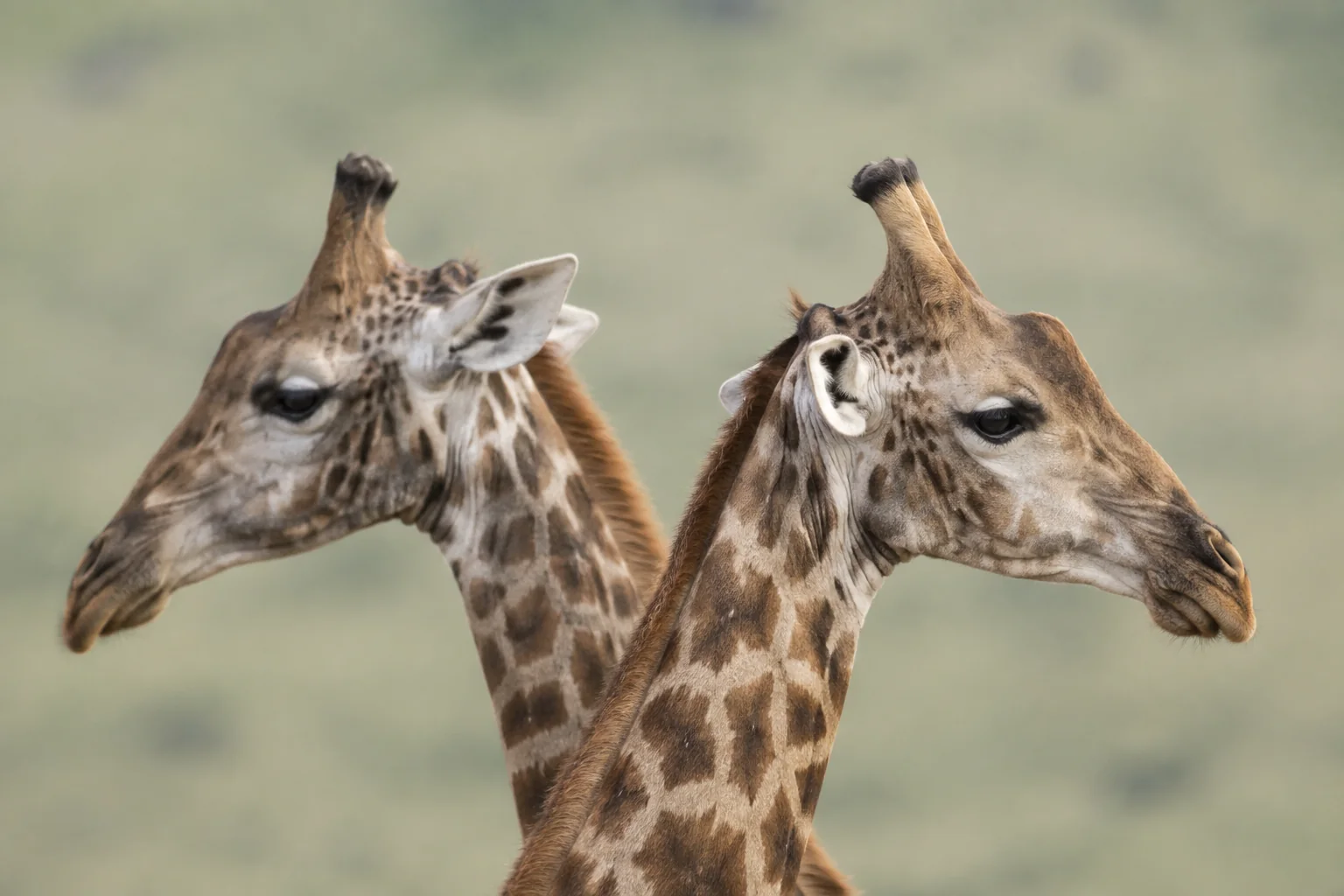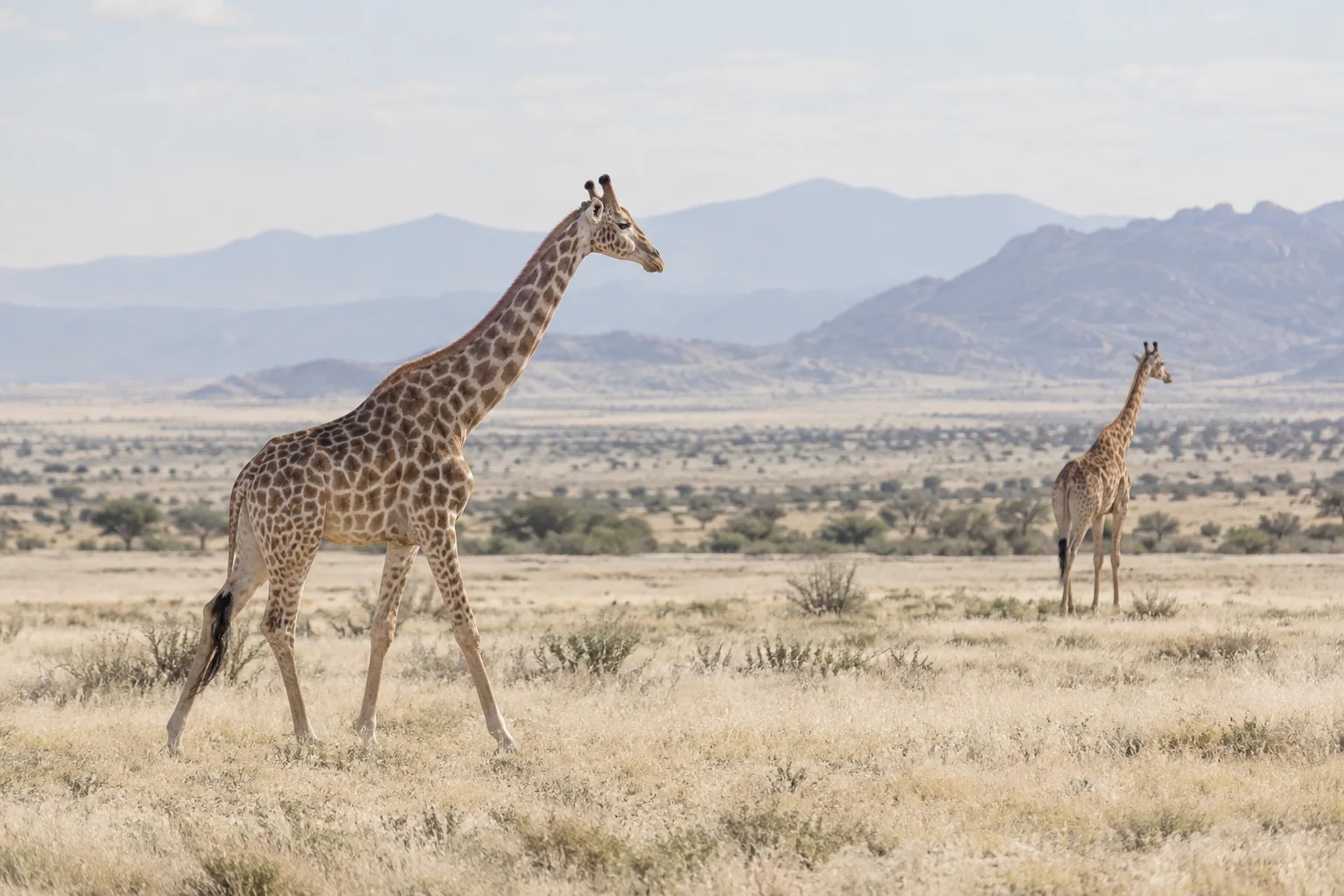
A short distance on a map can conceal a formidable obstacle. In northern Tanzania, the Gregory Rift's steep escarpments stand between Masai giraffes in the Serengeti–Ngorongoro region to the west and those in the Tarangire region to the east. An animal must be able to reach another population and reproduce there before it can contribute genes to that population's future.
George G. Lohay and colleagues investigated how that landscape had shaped giraffe inheritance. Their 2023 paper in Ecology and Evolution revealed two distinct genetic populations, but also a difference between the histories passed down by mothers and fathers. Maternal lineages showed a much older separation. The rest of the genome suggested that males had continued to connect the populations later.
Those contrasting histories help explain why conserving Masai giraffes means more than protecting a species-wide total. If giraffes on either side disappear, a distinctive part of the species' inherited diversity could disappear with them. The team's work identifies what needs attention on each side of a barrier that has shaped the giraffes for far longer than modern land use.
Mothers and fathers leave different records
Most of a giraffe's DNA lies in the cell nucleus and comes from both parents. Mitochondrial DNA is a smaller genome passed from a mother to her offspring. Comparing the two gives researchers a way to ask whether males and females have contributed equally to connections between populations.
Consider a male that reaches a population on the other side of the Rift and breeds there. His offspring inherit some of his nuclear DNA, but their mitochondrial DNA comes from their local mother. Over generations, males could therefore make the two populations more similar across their nuclear genomes while leaving their maternal lineages separate.
That is the mechanism behind Lohay and colleagues' interpretation. In their samples, maternal lineages sorted overwhelmingly into eastern and western groups. DNA inherited from both parents also distinguished the two sides, but pointed to a much younger separation. The team inferred that males had contributed genes across the divide after exchange through maternal lines became very restricted.
The comparison reveals ancestral reproduction; the individual journeys are long beyond observation. It also cannot tell us that every female stayed on her side of the Rift. An animal that moved but left no surviving descendants would not establish a lasting genetic connection.
Gathering the two sides of the family history
The team obtained the broad maternal comparison from an unassuming source: cells adhering to giraffe droppings. Between December 2019 and March 2021, they collected faecal samples from 320 giraffes across six protected areas. Photographs recorded the animals being sampled, and the researchers read a short mitochondrial sequence from their DNA.
Tissue samples supported a second comparison of complete mitochondrial and nuclear genomes from 100 giraffes. Together, the datasets allowed the team to compare maternal variation across many animals with a much fuller record of inheritance in the genome sample.
Both views showed the geographical divide. Among the complete mitochondrial genomes, 13 of 14 groups of related sequence variants occurred exclusively on one side of the Rift. Comparisons of nuclear DNA also found larger differences across the Rift than between the pairs of populations examined within each region. Several analyses recovered the same broad eastern and western grouping.
The result develops an earlier discovery. David Brown and colleagues' 2007 study had identified eastern and western Masai maternal lineages using much shorter mitochondrial sequences. Lohay's team compared those published sequences with their new data and found the same broad separation. Whole genomes and a focused landscape comparison then allowed them to investigate how that divide differed between maternal and biparental inheritance.
Lake Manyara preserves a more complicated history
Lake Manyara is the revealing exception. Although it lies in the eastern ecosystem, all four Lake Manyara giraffes in the genome analysis carried a western maternal lineage. Their nuclear ancestry fell between the broad eastern and western groups. In the larger mitochondrial-fragment dataset, the researchers found both eastern and western maternal variants at Lake Manyara.
The lake helps make sense of this mixed history. Giraffes there live between the escarpment and the water, so changes in the lake's extent could change which neighbouring populations they could reach. The authors considered two possible beginnings: giraffes arriving from the east and later receiving western ancestry, or western founders later receiving eastern ancestry.
Lake Manyara was larger in the past. The authors suggest that giraffes might first have descended from the west, then gained connections with eastern populations as the lake receded and access around it opened. The genomes support mixed ancestry, but they cannot choose between all the details of those founding histories. The four genome samples are also too few to establish how widely their particular combination occurs within Lake Manyara.
This population shows why a genetic boundary needs to be read alongside the landscape. The broad Rift divide is strong, while a local population can preserve a history of contact that the simple east–west picture would miss.
The divide is ancient; its exact dates are less certain
To estimate the age of the maternal separation, the researchers used a molecular clock. This translates accumulated DNA differences into time using assumptions about evolutionary rates and reference dates. One calibration placed the eastern and western maternal lineages' most recent common ancestor around 289,000 years ago; another placed it around 665,000 years ago.
Both estimates point to an ancient history, but neither dates the last female crossing. They date a shared maternal ancestor. Distinct lineages could already have existed before giraffes established populations on opposite sides of the Rift; the paper leaves alternative origins open.
The approximate nuclear timescale was much younger, around 10,000 years. That estimate came from a comparison with genetic differentiation in other mammals, rather than an equally direct clock for the giraffe populations. The authors explicitly allowed that it could be wrong by a factor of two or more. The useful contrast is therefore an old maternal divide with later inferred connections through males, rather than a precise timetable of migrations.
Where could those males have passed? The researchers used terrain to identify possible routes avoiding the steepest escarpments, then asked how distances along those routes compared with genetic differences. Some route comparisons fitted better than straight-line distances, although support varied between statistical tests. No giraffe crossing was documented. These are hypotheses about past routes; knowing which passages remain usable would require observations of giraffes in the landscape.
Protect both populations and their remaining connections
Lohay and colleagues proposed treating eastern and western Masai giraffes as separate evolutionarily significant units: populations whose distinctive evolutionary histories deserve consideration in conservation planning. This is a distinction within Masai giraffes, rather than a new species classification.
Their practical priority was to maintain connections among populations within each region. A steep natural barrier has separated the two broad groups for a long time; fragmentation within each side could now divide their remaining giraffes into still smaller breeding populations. Protecting access between those populations could help preserve the exchange that remains possible.
The genomes also raised a concern about inbreeding. The western samples had higher average estimates of DNA inherited from shared ancestors than the eastern samples. Such a pattern can make a population more vulnerable when close relatives reproduce, but these genetic measurements did not establish effects on calf survival or breeding success. They give a reason to investigate those outcomes in the animals carrying the DNA.
Derek Lee and Douglas Bolger's 2017 research shows what a connection within the eastern region looks like in field records. They followed individually recognisable female giraffes across five Tarangire subpopulations using photographs collected from 2012 to 2014. Movement between areas was uncommon, but none of the five subpopulations was completely isolated during that study.
Lake Manyara had particularly few movements into or out of it. The authors highlighted the need to protect existing passages or restore historical ones between it and neighbouring giraffes. Those observations give the genetic concern a concrete setting: an animal can carry ancestry from past connections even when opportunities to meet new breeding partners have become scarce. The habitat and range guide explains why the land between protected areas matters.
Which connections can future generations inherit?
Lake Manyara offers a useful next question. A larger genetic sample from different age groups and neighbouring populations could establish how widespread its mixed ancestry is. Pairing that with repeated observations could help distinguish an inherited record of old contact from families still exchanging genes today. The small whole-genome sample in the 2023 study makes this comparison particularly informative.
Across the two regions, following identified giraffes with known genetic measures could test whether greater inbreeding is associated with lower calf survival or reproductive success. Habitat, age and family relationships would need consideration, so that environmental differences were not mistaken for a genetic effect.
The authors also suggest wider sampling in southern Tanzania and southern Kenya to investigate the origins of the eastern and western populations. Finding where related maternal lineages occur beyond the study area could help distinguish populations founded separately from those founded by dispersal across the Rift. Lohay and colleagues have shown which histories need explaining; broader sampling could reveal how those histories began.
Sources
- George G. Lohay, Derek E. Lee, Lan Wu-Cavener, David L. Pearce, Xiaoyi Hou, Monica L. Bond and Douglas R. Cavener (2023). Genetic evidence of population subdivision among Masai giraffes separated by the Gregory Rift Valley in Tanzania. Ecology and Evolution 13:e10160. DOI: 10.1002/ece3.10160.
- David M. Brown, Rick A. Brenneman, Klaus-Peter Koepfli, John P. Pollinger, Borja Milá, Nicholas J. Georgiadis, Edward E. Louis Jr, Gregory F. Grether, David K. Jacobs and Robert K. Wayne (2007). Extensive population genetic structure in the giraffe. BMC Biology 5:57. DOI: 10.1186/1741-7007-5-57.
- Derek E. Lee and Douglas T. Bolger (2017). Movements and source–sink dynamics of a Masai giraffe metapopulation. Population Ecology 59:157–168. DOI: 10.1007/s10144-017-0580-7.