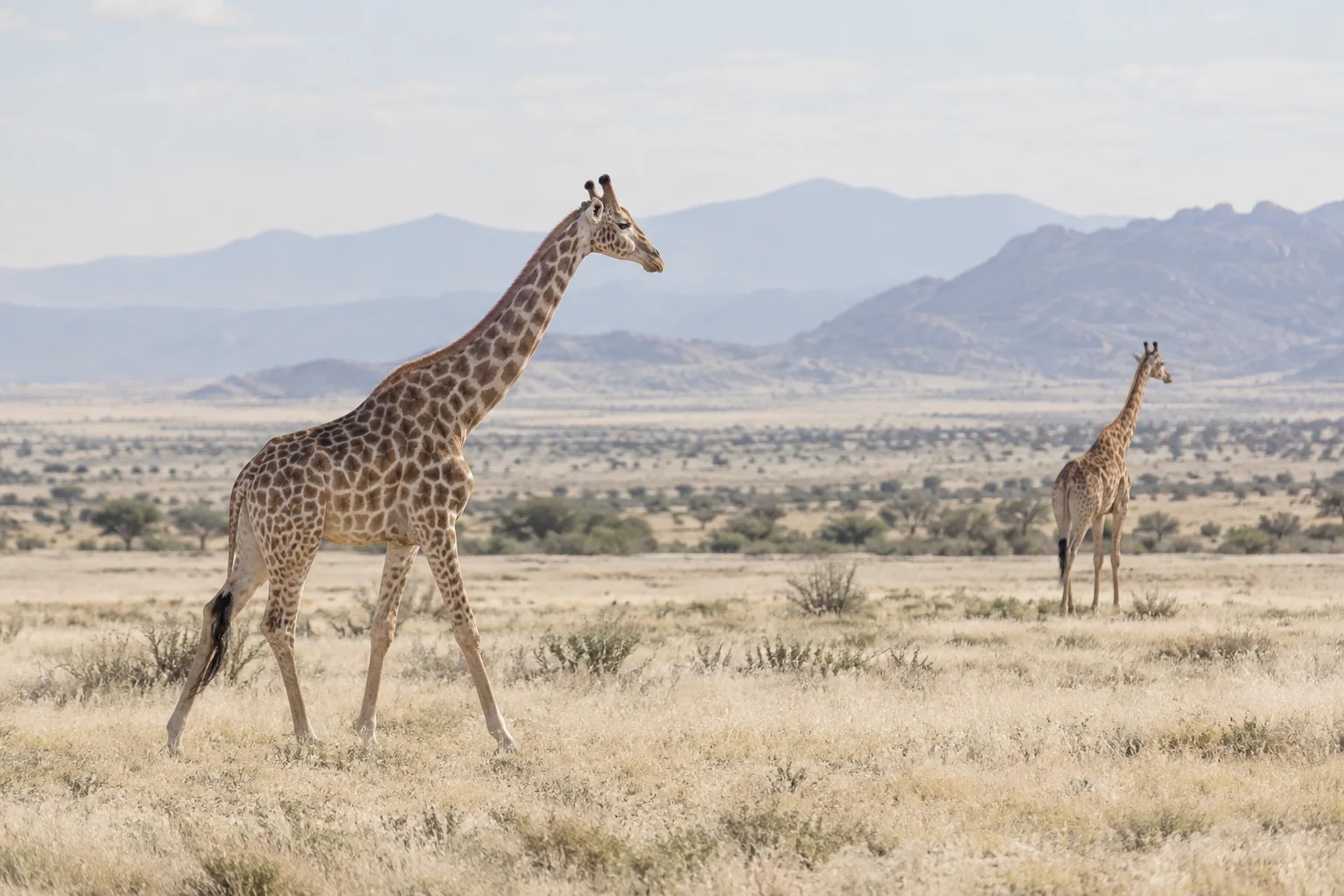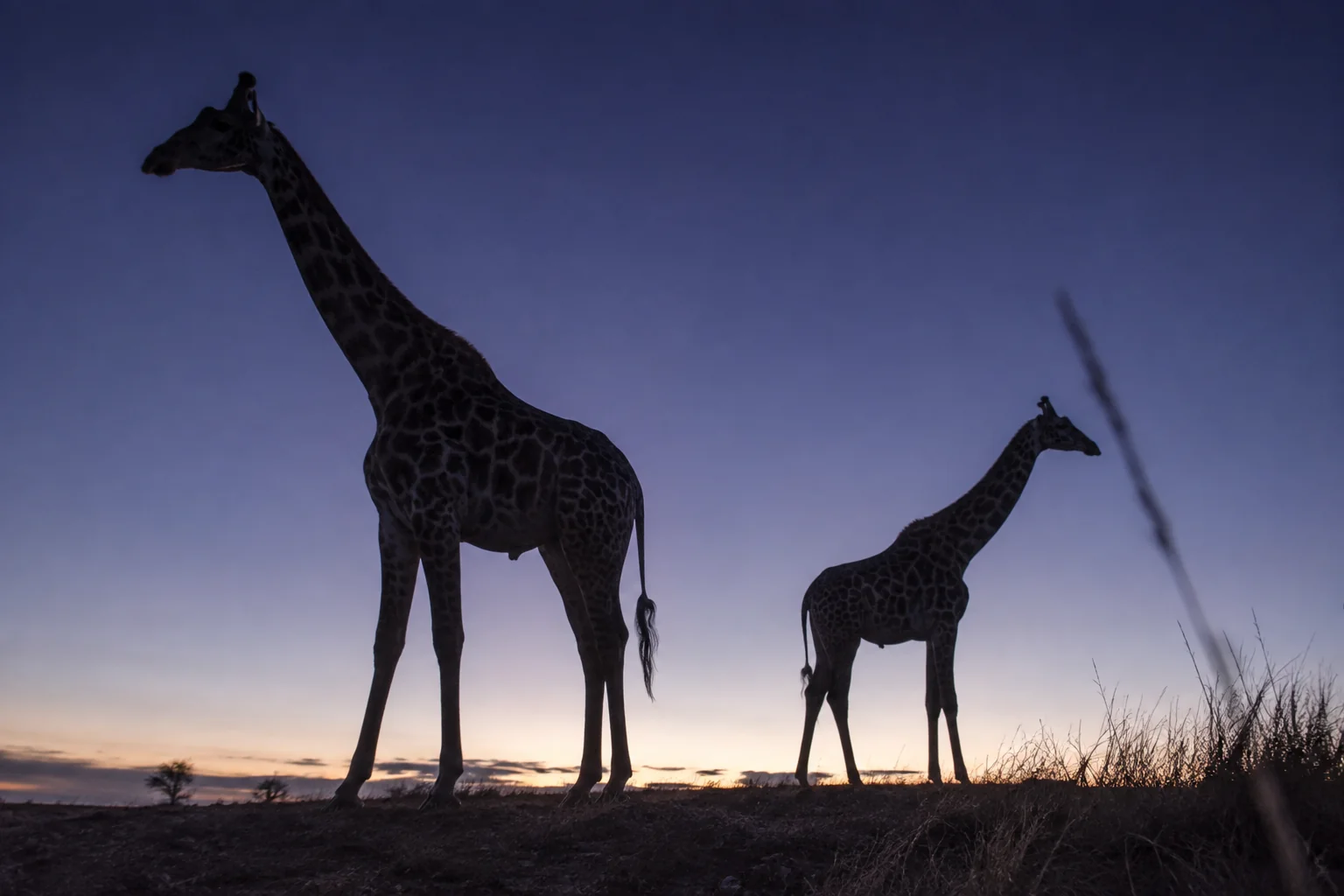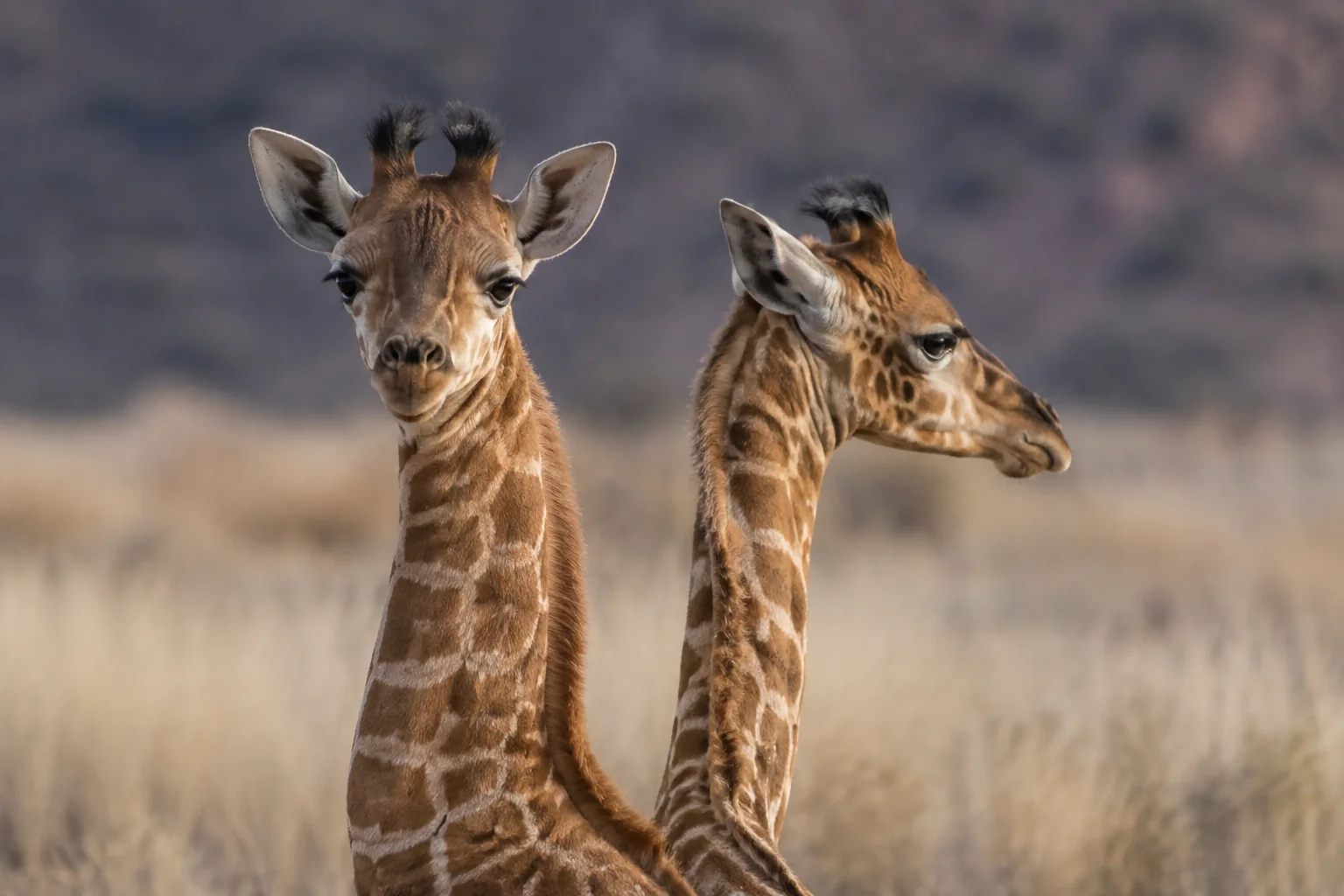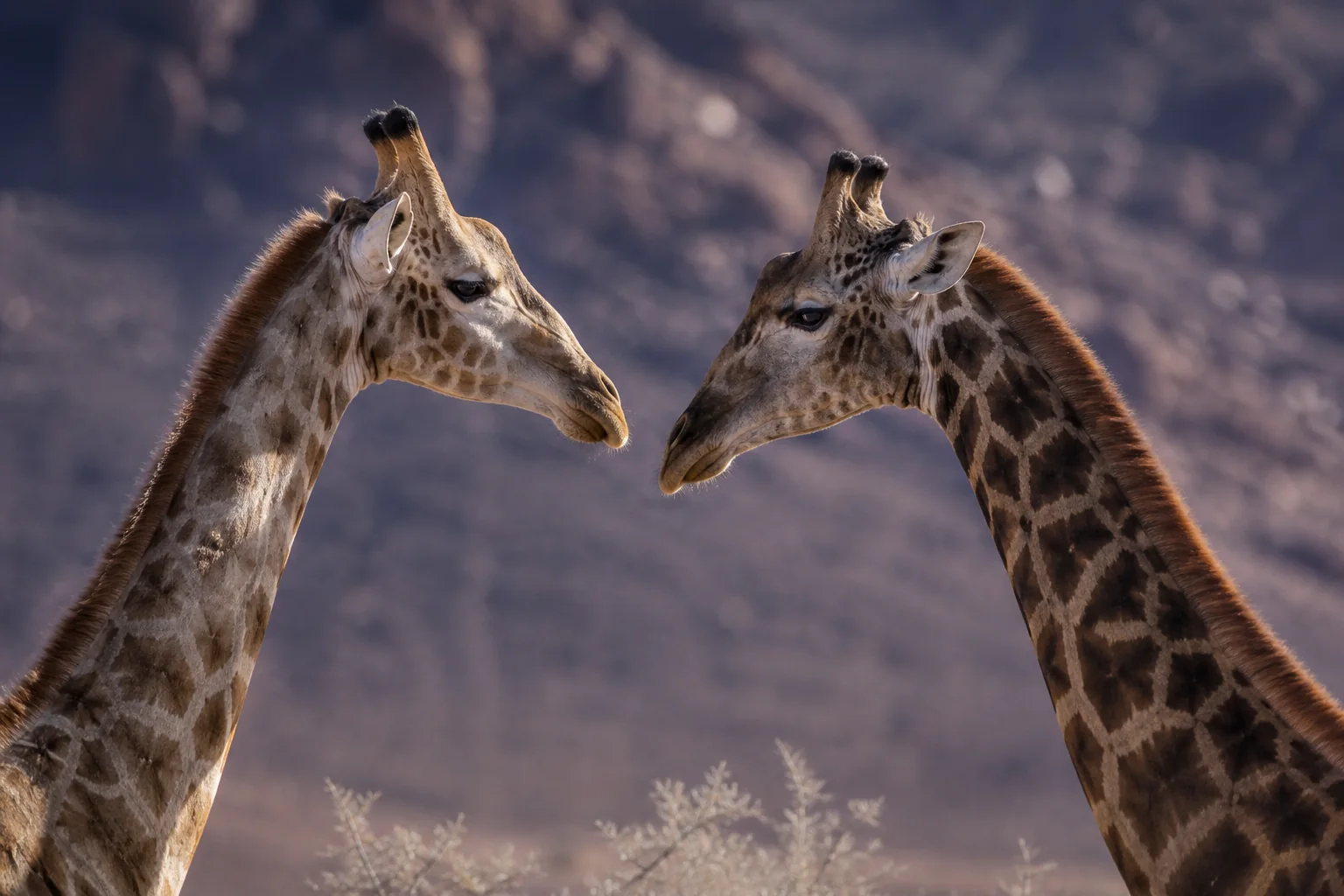
Having many acquaintances is different from repeatedly spending time with a few close companions. That distinction matters in giraffe society too. A male that appears alone during one sighting can still connect many groups over months and years.
Juan M. Lavista Ferres and colleagues investigated those wider connections in Tanzania’s Tarangire ecosystem. Their five-year record revealed four large mixed-sex social communities and different roles for males, females and younger animals within the network.
Adult males were especially well positioned to connect the wider population. Animals first seen as male calves had the greatest number of associates. The finding adds a different dimension to giraffe sociality: the reach of an individual’s connections, rather than simply the strength of its closest relationships.
Turning repeated sightings into a social map
The study used photographic surveys from 2011 to 2016 across roughly 1,500 square kilometres. Individual coat patterns allowed the team to recognise giraffes without capturing or marking them.
The final analysis included 1,081 animals seen at least six times. When two giraffes were recorded in the same group, the researchers counted an association. Repeated associations contributed to a network linking the individuals.
This approach treats group membership as evidence of association, not proof that every pair touched, interacted directly or preferred one another. It is a practical way to compare a large population, provided the meaning of a connection remains clear.
The age comparison also needs care. The younger category consisted of animals first seen as calves, followed as they grew. It did not mean that every recorded association involving those animals occurred before their first birthday. Individuals first seen as subadults were excluded because there were insufficient repeat observations for the analysis.
The researchers then asked three questions about each giraffe: how many associates did it have, how few links separated it from the rest of the network, and how often did the shortest connection between other giraffes pass through it?
Different ways to be well connected
The first measure is straightforward: the number of associates accumulated across the record. Adult males averaged about 85, compared with 47 for adult females. Animals first seen as male calves averaged about 91, compared with 73 for those first seen as female calves.
These are accumulated network connections, not the size of a herd standing together at one moment. Nor does a higher number imply that the animal had stronger bonds with each associate.
The second measure describes reach through the network. An animal linked to others who themselves have broad connections can be only a few steps from much of the population. Adult males had the highest value on this measure, known as closeness centrality.
The third identifies connecting positions between different parts of the network. Animals first observed as calves, especially males, had high values. The authors suggest this may reflect social exploration before dispersal. That is an interpretation of the pattern; the network itself does not reveal the motivation behind each encounter.
The measures therefore do not produce a single ranking of the “most social” giraffe. A young male can accumulate many associates, while an adult male’s particular connections place him closer to the population as a whole.
Communities larger than a visible group
Analyses that combined all observations, and analyses that allowed the network to change over time, both identified four broad mixed-sex communities. These contained smaller female social communities documented within the population.
A large community was not a permanent travelling herd. Its members formed changing smaller groups, but associated enough across repeated observations to belong to the same wider social structure.
Most giraffes remained within the same large community over the study. Adult males were more likely than females or younger animals to appear in another, often returning later. This fits the authors’ interpretation that searching for reproductively receptive females can connect otherwise more stable female social circles.
The geographical pattern emerged from association data: location was not used to define the communities. That makes the correspondence between social membership and space informative, while reminding us that opportunities to meet still depend on where animals live.
Strong ties and wide reach answer different questions
This study extends earlier work on female relationships in the same research population. It should be read as a wider analysis of a continuing observation programme, not as independent replication of every previous social finding.
Its central distinction is useful for conservation planning. Removing or moving an animal could affect a small set of frequent companions, a wider set of occasional associates, or both. Knowing that an individual has many connections does not tell managers that it is interchangeable with another highly connected animal.
The study did not test translocation outcomes or show that a particular move reduced survival. It identifies social structure that a move could disrupt and gives researchers more specific questions to investigate.
Following the same animals through maturation would help show how a young male’s many connections develop into the adult pattern. Comparing close relationships with wider connections in the same individuals could also clarify whether their benefits differ. What this study establishes is that male giraffes can connect a society broadly without requiring the same pattern of close association that characterises adult females.
Sources
- Juan M. Lavista Ferres, Derek E. Lee, Md Nasir, Yu-Chia Chen, Avleen S. Bijral, Fred B. Bercovitch and Monica L. Bond (2021). Social connectedness and movements among communities of giraffes vary by sex and age class. Animal Behaviour 180, 315–328. DOI: 10.1016/j.anbehav.2021.08.008. Full paper hosted by Wild Nature Institute.