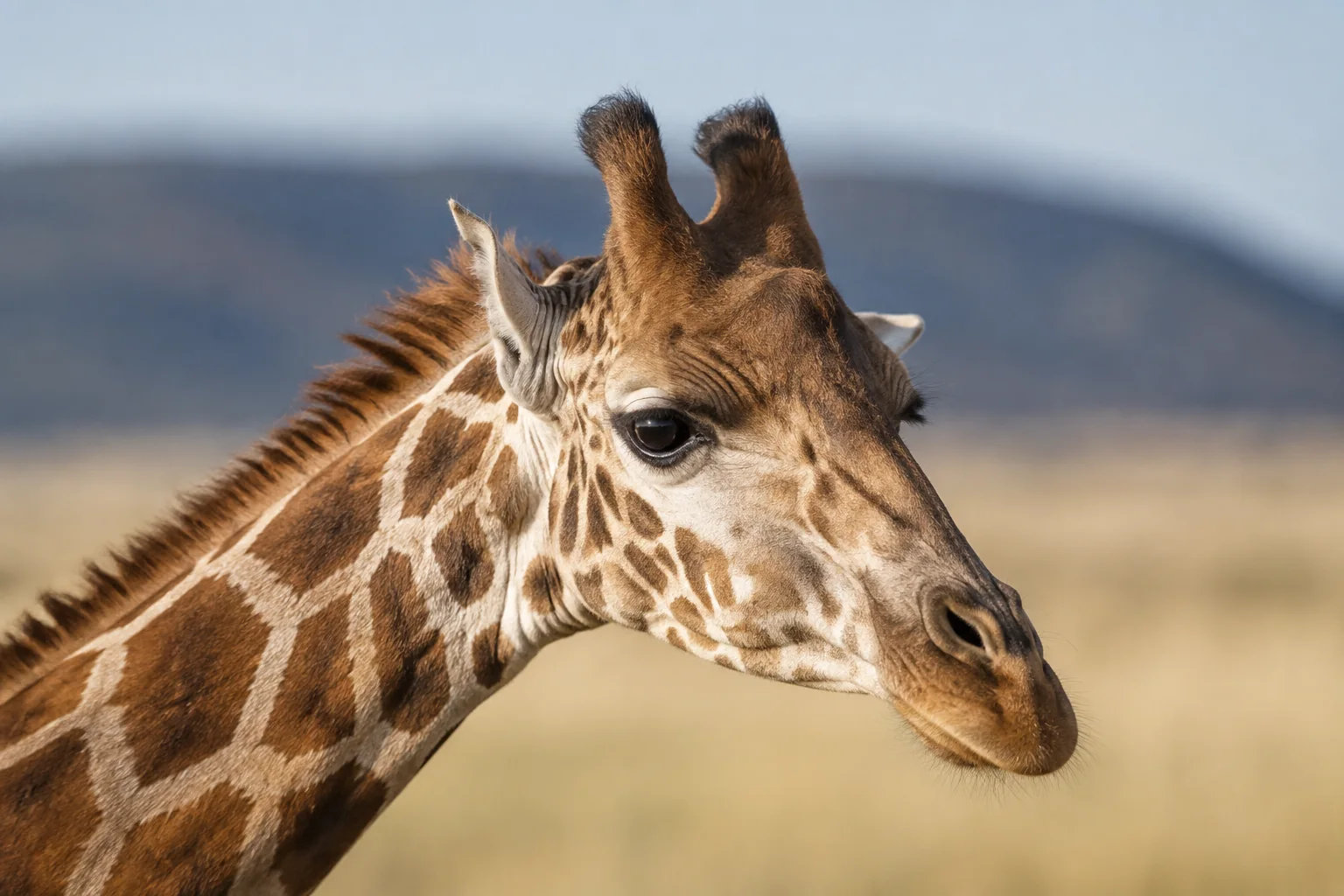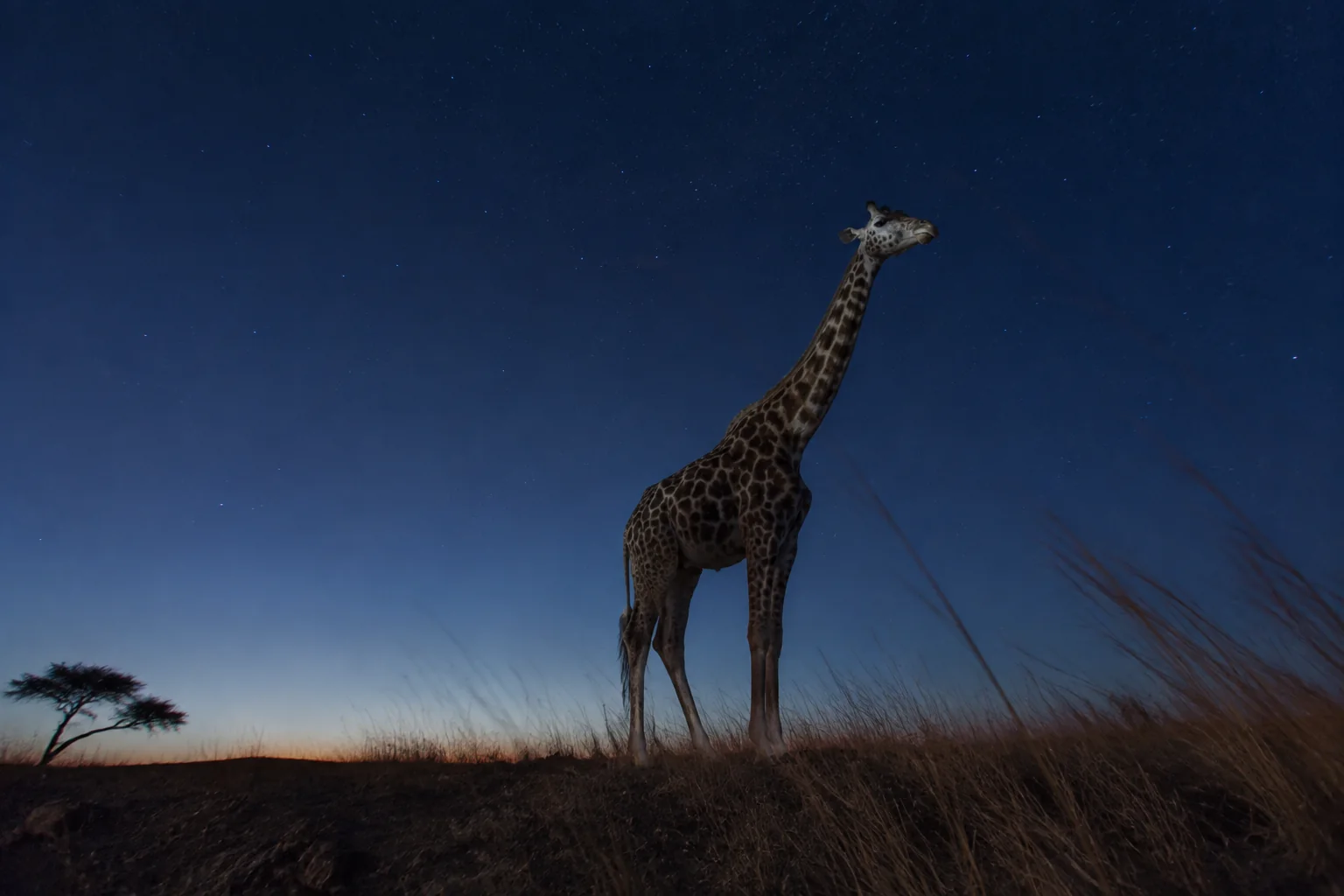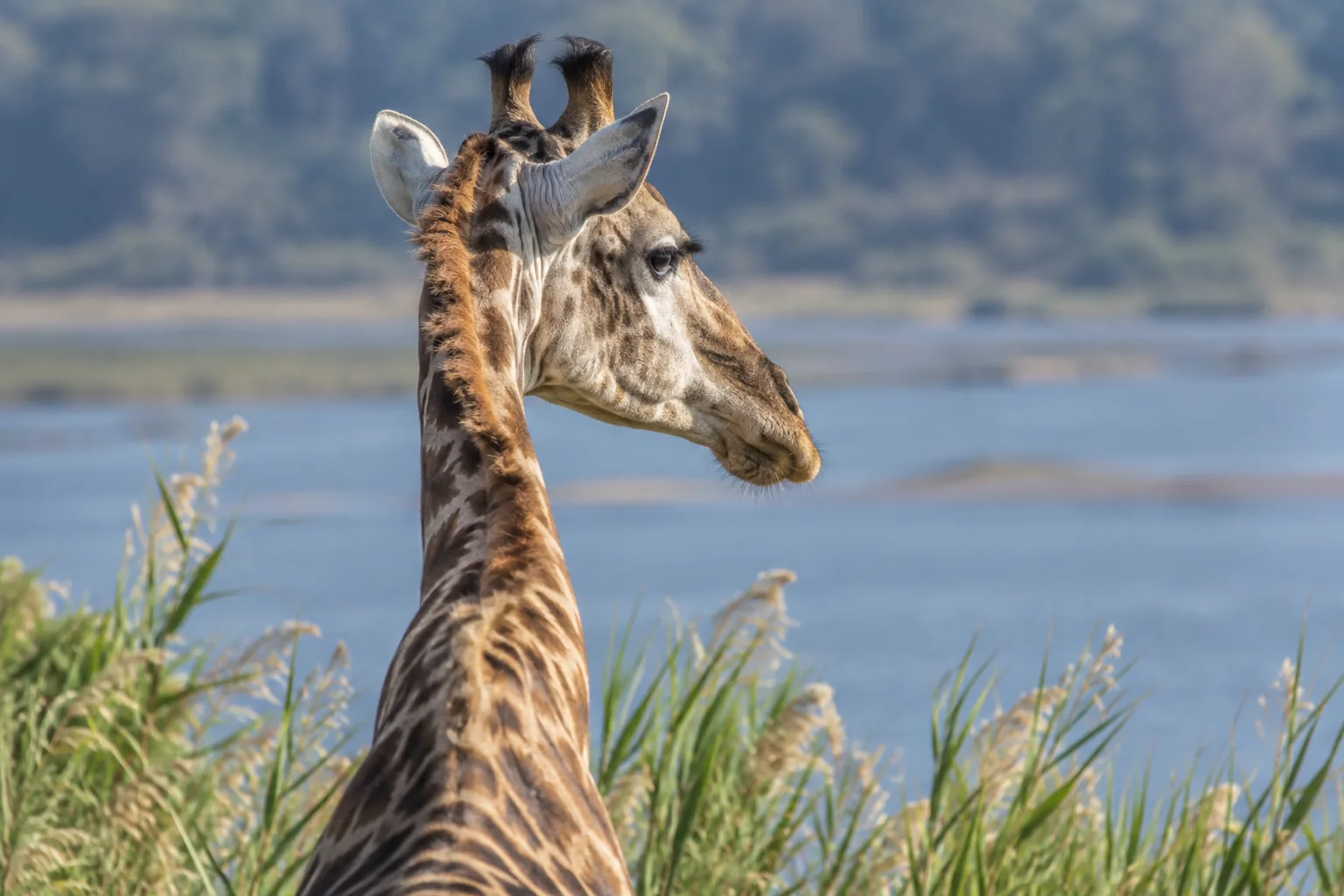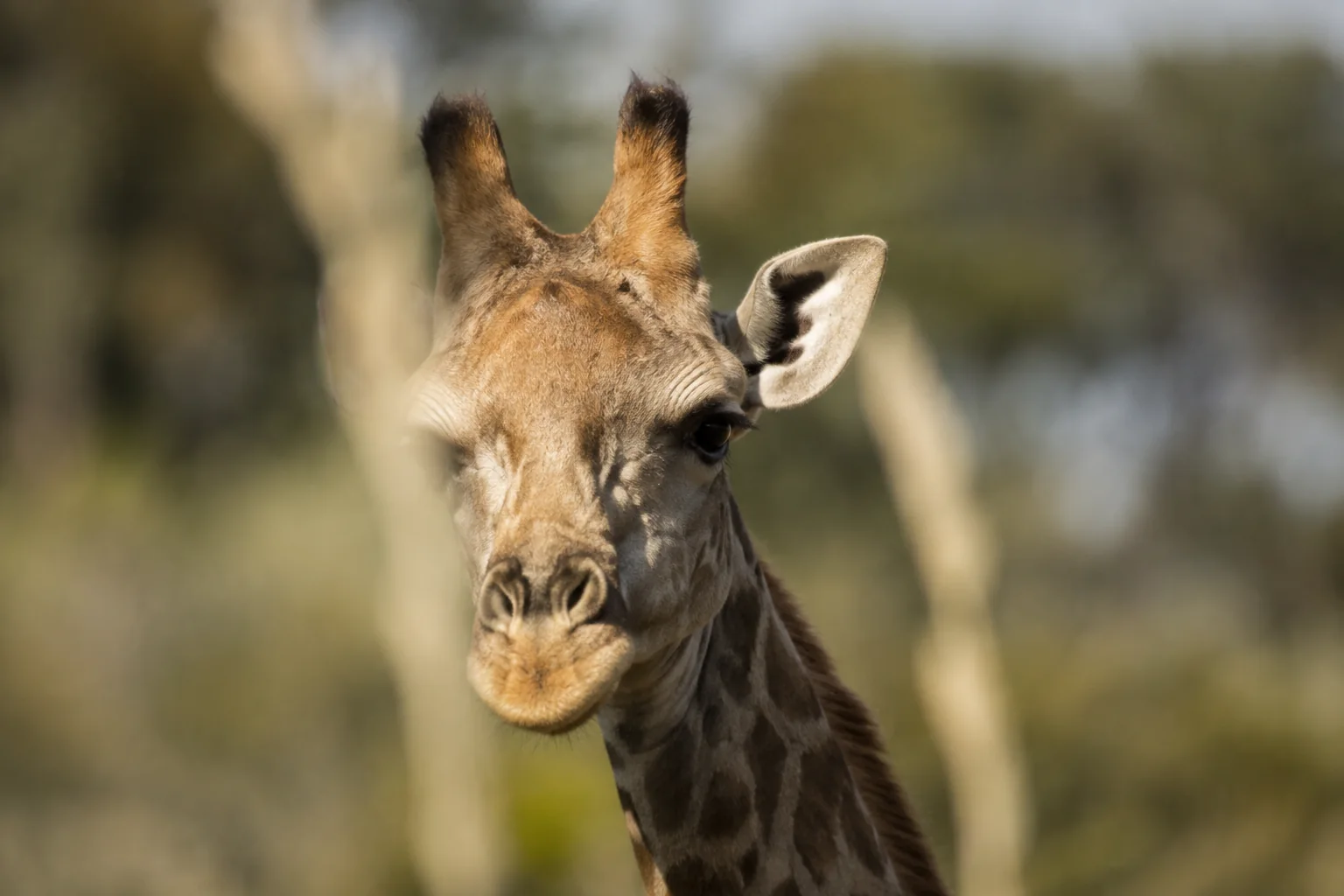
A vehicle has more than one way to disturb an animal. It moves, changes shape as it approaches and makes noise. If a giraffe stops feeding when a vehicle passes, the interruption does not tell us which of those features mattered. That distinction becomes useful when deciding how much a quieter vehicle, a different route or reduced noise might change an animal's experience.
Kaitlyn Taylor and colleagues separated one part of that problem in a 2025 playback experiment. They presented human voices, engine noise and drone noise from a concealed loudspeaker, with no corresponding moving machine. Across three reserves in South Africa's Free State, the clearest effects came from vehicle and drone sounds at the site with the least routine human exposure.
The same sounds in three different surroundings
The researchers chose reserves that differed in encounters with people and background disturbance. One was an urban reserve with public access and frequent pedestrians and vehicles. Another had intermittent direct encounters but nearby highway noise. The third offered a comparatively quiet setting where giraffes usually had less contact with people. None contained large predators during the study.
This was a comparison of existing settings, rather than an experiment that assigned animals to years of different exposure. Habitat, management and individual histories could therefore accompany the differences in human activity. The controlled element was the sound played during each trial.
The team waited for a giraffe to feed or ruminate calmly before beginning. A hidden speaker played one of the human-associated sounds or the cooing of a ring-necked dove, a familiar background bird at all three sites. Recordings of different examples within each sound category reduced the chance that the entire result depended on one unusual engine or voice.
The dove mattered because turning toward a speaker need not mean recognising a threat. Even an ordinary sound might attract attention. Comparing reactions with the dove calls asked whether the human-associated recordings produced something beyond that baseline.
An ear movement and a retreat are different responses
Video allowed the team to distinguish a small orienting movement from an interruption of feeding, a sustained inspection or withdrawal. Their reaction scale ran from continuing the original activity to moving away rapidly. They gave greatest weight to actions occurring soon after playback began, when a connection to the sound was easiest to defend.
That measure described the strength and immediacy of a visible response. The researchers also examined how long reactions lasted. These two measurements did not deliver equally clear answers: response durations varied substantially, and the duration analyses did not establish consistent differences between human-associated sounds and dove calls.
There was another practical problem. A giraffe did not always stay available for both parts of a trial, and control and test recordings could occur under different conditions. The team therefore supplemented its analysis with comparisons matching a giraffe's test exposure to its own most comparable dove trial, taking account of factors including wind, distance and group size.
The clearest result survived that more closely matched comparison. At the lowest-exposure reserve, vehicle and drone sounds elicited stronger immediate reactions than dove calls. The human-voice effect there was uncertain. At the other two reserves, the matched estimates for all three human-associated sound categories also remained uncertain.
Thus the experiment does not establish that every giraffe reacts more strongly to every human sound. It identifies a particularly clear response to mechanical noise in the quietest study setting.
Familiarity may change what deserves attention
Repeated experience could help giraffes learn that common background sounds often have little consequence. That is one plausible explanation for weaker responses at more human-exposed sites. The study did not follow individuals as they learned, so familiarity remains an interpretation of the comparison rather than a measured learning curve.
A separate lion-call experiment makes the role of experience especially interesting. Giraffes in two other South African reserves turned quickly toward lion recordings, but those living alongside lions remained vigilant much longer. In one situation, experience may reduce attention to a routine disturbance; in another, it may help maintain attention to a consequential threat. These are different populations and stimuli, not a single experiment demonstrating both learning processes.
Together, the studies suggest that a sound's physical properties and the animal's surroundings belong in the explanation. Calling giraffes either easily disturbed or habituated loses the possibility that they treat particular sounds differently.
Measuring the cost of an interruption
An immediate reaction supplies evidence that sound alone can alter behaviour. It does not reveal how much food an animal loses over a day, whether its stress physiology changes, or whether reproduction is affected. A brief pause may be readily compensated for; repeated interruptions could have a different consequence.
The next useful comparison would connect sound exposure with what happens afterwards: how quickly feeding resumes, whether the giraffe changes feeding sites and whether the same individuals respond differently after repeated exposure. Repeated observations would need to distinguish learning from changes in season or group composition.
For management, the study supplies a reason to assess noise locally. A response measured in a busy reserve cannot simply be transferred to a quieter population, and the absence of a large visible reaction cannot by itself establish that repeated exposure has no cost. Taylor and colleagues have made sound a measurable part of the giraffe's surroundings, alongside the objects and people producing it.
Sources
Kaitlyn Taylor, Sean van der Merwe, Francois Deacon, Andri Grobbelaar and Anton Baotic (2025). Ecological Exposure History Shapes Giraffe Vigilance Responses to Anthropogenic Noise: A Multisite Playback Experiment. Ecology and Evolution 15, e72763. DOI: 10.1002/ece3.72763. Read the full paper.
Anton Baotic and Georgine Szipl (2025). Learning to fear: predator recognition in giraffes is shaped by evolved sensitivity and ecological experience. Frontiers in Ecology and Evolution 13, 1634218. Full study.