A change in a giraffe group might be obvious during visiting hours and much less apparent after dark. That possibility matters for anyone trying to judge how animals respond to a departure or a new companion: a few hours of observation may describe one part of their day very well and still miss the rest.
Hanna Mebus, Sebastian Schneider, Paul Wilhelm Dierkes and Anna Lena Burger-Schulz investigated activity around the clock at Opel-Zoo, in Germany. Their recordings followed three female reticulated giraffes while two other females left and a male subsequently joined the group.
Daytime standing increased, and the proportion of time recorded as feeding declined. Nighttime activity was comparatively stable. The result suggests that different parts of the daily routine can respond differently to the same sequence of social changes. It also exposes a practical challenge: when animals can leave the camera’s view, apparent changes in activity require careful interpretation.
Twenty-two days across two changes
The team recorded continuously from 13 March to 3 April 2023, using infrared-sensitive cameras inside the giraffe house. Three resident females were the focal animals throughout the 22-day period.
Initially they lived with two additional females. Those two left on 20 March. A male arrived on 28 March, giving the researchers three successive group conditions to compare. The male was physically separated from the females at night.
This was a study of actual management changes, rather than an experiment that randomly assigned giraffes to different groups. The sequence provided a valuable continuous record, but time, group composition and the consequences of each preceding change were linked together.
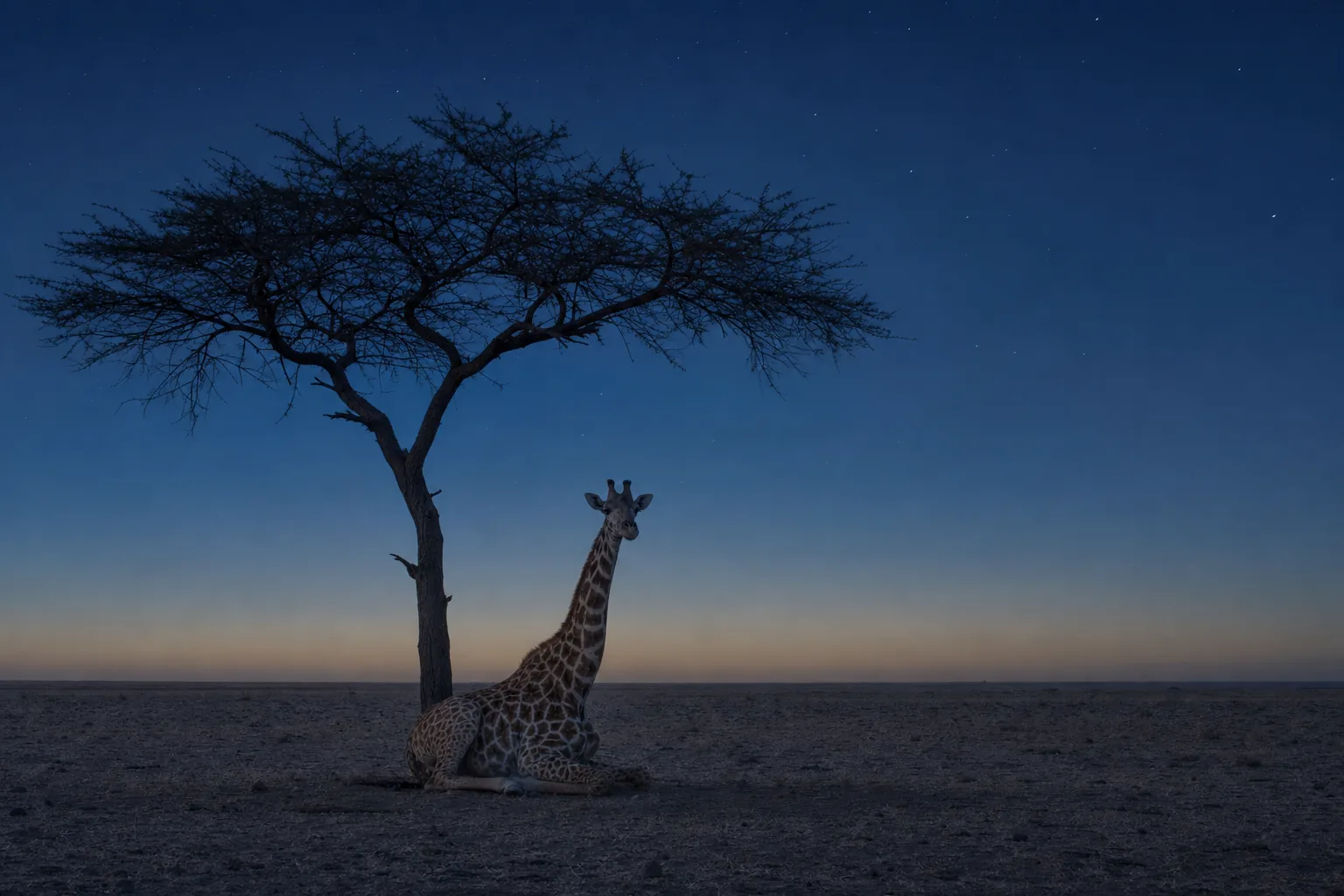
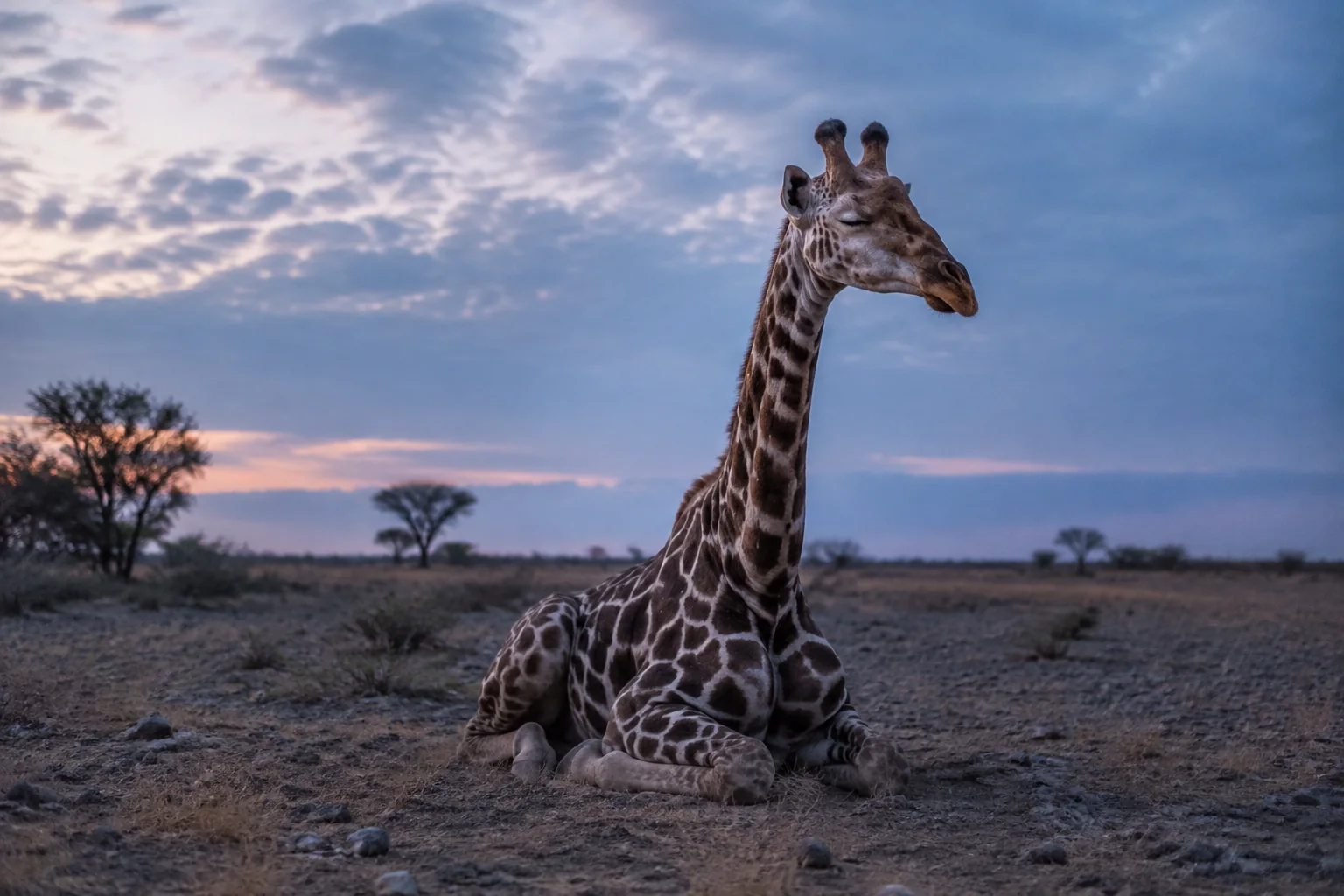
The researchers distinguished standing, walking, feeding, lying and a characteristic head-resting posture associated with rapid-eye-movement sleep. That posture is visible on video; sleep stages themselves would require physiological measurements. They also recorded proximity and interactions to explore changes in social relationships.
For analysis, daytime ran from 07:00 to 17:00 and night from 17:00 to 07:00. These fixed observation windows made comparisons consistent across the short study, without implying that every animal followed an exact human timetable.
Standing changed more clearly than the night routine
During the baseline, standing occupied about 29 percent of the daytime record. That rose to about 32 percent after the two females departed and about 49 percent after the male arrived.
The feeding category moved in the opposite direction: about 41 percent initially, falling to roughly 25 percent in both later periods. However, the cameras covered the indoor area. Some time was recorded as out of view, and that category increased after the first group change. The percentages therefore cannot establish that the females ate less across their entire day. They show less feeding recorded within this particular camera coverage.
This is a consequential difference. Moving outdoors could reduce visible indoor feeding without reducing total feeding. The standing increase after the male arrived remains part of the observed pattern, but a conclusion about food intake would need information beyond the indoor video.
Nighttime was different. Across the full study, lying occupied close to half the nighttime record and feeding more than a quarter. The proportions of standing and feeding fluctuated across the group conditions without the pronounced daytime shift. The broad nighttime activity pattern remained comparatively stable.
That stability cannot be credited solely to the females adapting easily to a new male. He was separated from them overnight, so their immediate social circumstances differed between day and night. The housing arrangement is part of the explanation that future comparisons would need to consider.
Proximity did not settle the social story
The researchers also mapped which animals were near one another. This offered a way to compare social patterns across periods, rather than assuming all members of the changing group interacted equally.
With only three focal females and brief periods in each condition, the resulting networks were small. The formal comparisons did not establish clear statistical relationships between the different networks. Individual patterns are useful observations, but they cannot support a strong conclusion that the females reorganised into particular preferred partnerships or consistently preferred their own giraffe type.
The paper is more informative about the changing activity record than about a general rule for partner choice. Its achievement was to connect management events to a continuous record that included the hours when people were absent.
Looking beyond the visitor day
The finding complements research on giraffe rest by asking a different question: not simply how giraffes rest, but whether a social change affects the daytime and nighttime portions of their routine similarly. Here, it did not produce an equally pronounced pattern in both.
For husbandry assessment, that gives a practical reason to combine daytime observations with overnight monitoring. More standing in daylight does not reveal, by itself, whether an animal also loses opportunities to lie down at night. Conversely, a stable night routine does not explain away a substantial daytime change.
Future observations covering both indoor and outdoor areas could resolve whether feeding shifted location or truly declined. Following more introductions, over longer periods, could also show whether the changes were temporary responses to an unfamiliar companion or persisted as the group settled. Those comparisons would need to record overnight separation, since access to companions is itself part of the animals’ daily environment.
The central insight is that a social event unfolds across an entire day. Seeing that full cycle can separate a changed daytime routine from a disruption that extends through the night.
Sources
- Hanna Mebus, Sebastian Schneider, Paul Wilhelm Dierkes and Anna Lena Burger-Schulz (2024). Around the clock: unveiling giraffe rest-activity rhythms and social dynamics. Frontiers in Conservation Science 5, 1462664. DOI: 10.3389/fcosc.2024.1462664. Open full text.