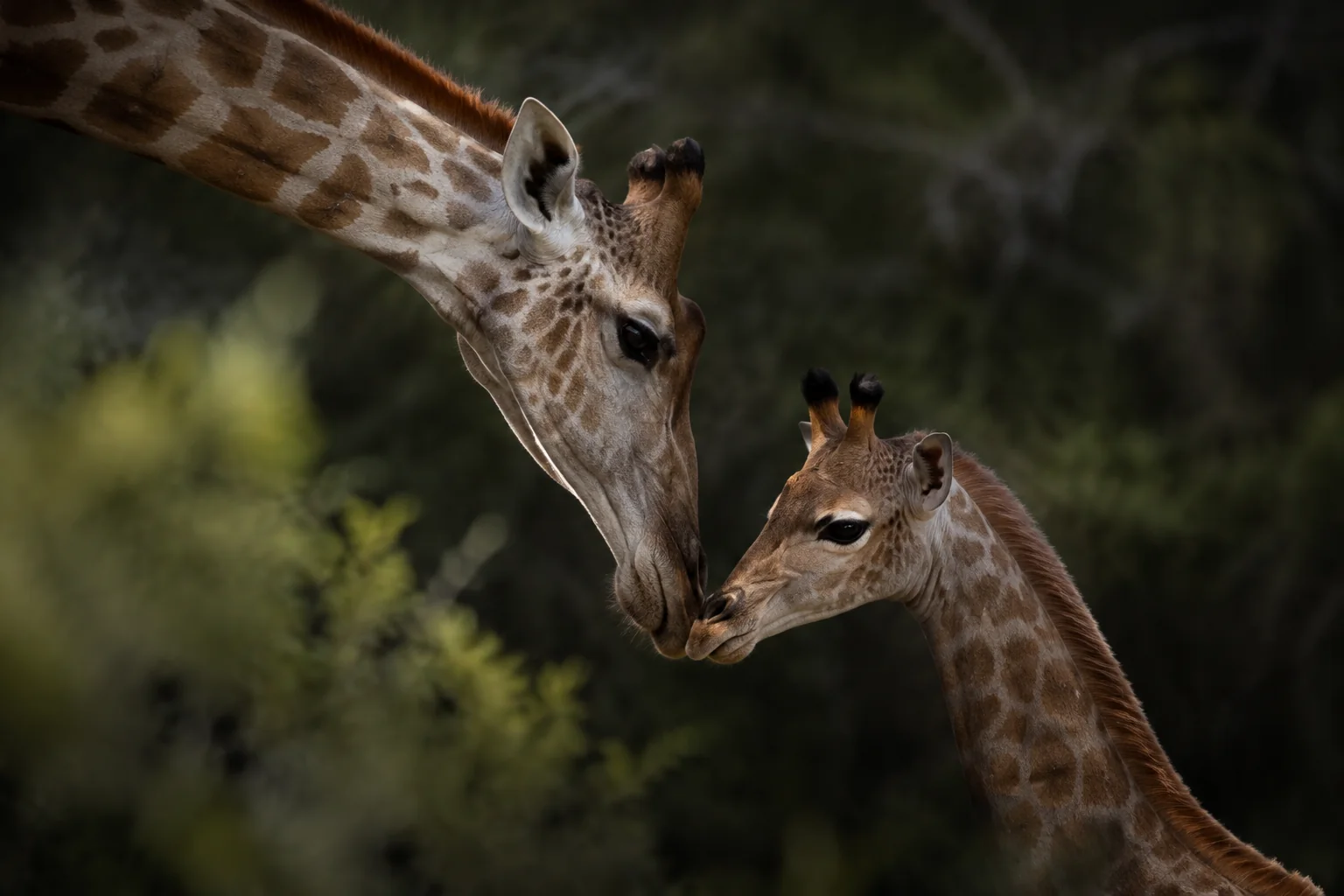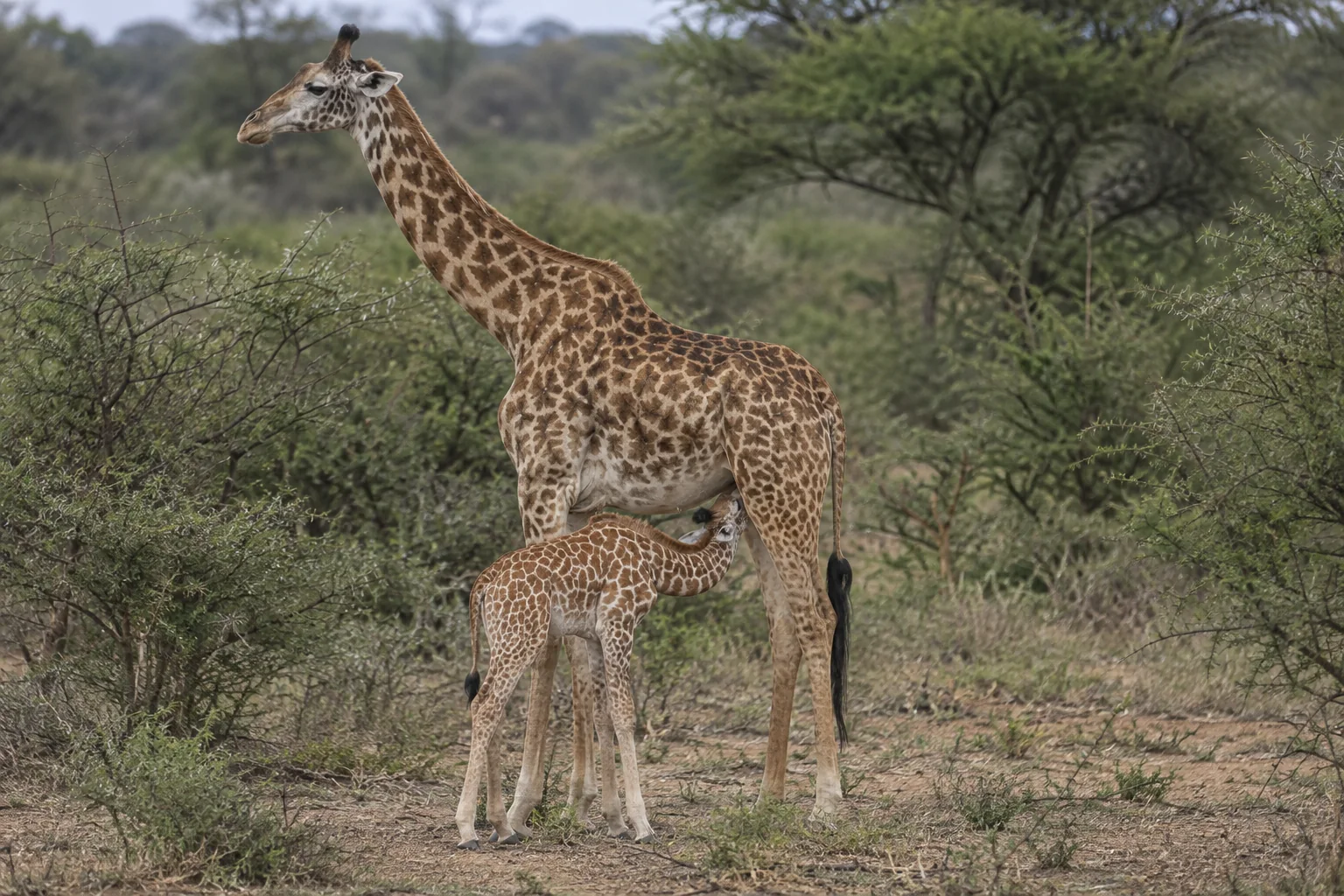
Milk joins two lives: the mother producing it and the calf receiving it. When a calf nurses from another female, the biological question has two sides. Why try an unfamiliar udder, and why does the female sometimes allow the attempt to continue?
Markéta Gloneková, Karolína Brandlová and Jan Pluháček examined both sides in a study published in 2021. Their observations of giraffes in four Czech zoos supported a combination of reciprocal nursing between females and opportunistic milk seeking by calves. These explanations can operate together: a calf may seek extra access while the female's tolerance depends on her own relationships and experience.
Shared nursing has several possible explanations
Allonursing means nursing a calf that is not the female's own. From the calf's side, the same event is called allosuckling. Neither term establishes whether the animals are related, whether the female recognises the calf, or how much milk changes hands.
Several ideas could explain the behaviour. Females might favour relatives. They might nurse one another's offspring, gaining a benefit when their own calf is accepted elsewhere. Inexperienced mothers might practise, or a mother might accept another calf because she has surplus milk. A calf might also obtain access by joining a nursing event that the mother is reluctant to interrupt.
The researchers translated seven explanations into predictions. That step made the alternatives testable. A practice explanation, for example, predicts more allonursing among less experienced mothers. Reciprocity predicts a link between how much two mothers nurse each other's calves. Simply observing shared nursing cannot distinguish those possibilities.
Following mothers, calves and individual bouts
The study drew on observations of 22 nursing females and 47 calves at Prague, Dvůr Králové, Olomouc and Liberec. Researchers recorded successful nursing bouts and unsuccessful approaches, the calves involved, their position, and whether the female sniffed them or ended the bout. Studbook records supplied information about kinship and maternal experience.
A successful bout required a calf to hold a teat for at least five seconds. This consistent definition allowed comparisons among observations, but it did not turn the stopwatch into a milk meter. Nursing duration and frequency describe behaviour; the researchers did not measure milk intake.
In the recorded sample, 564 bouts involved a female's own calf and 575 involved another calf. Those numbers count bouts, not separate animals. They also do not establish that half of all giraffe milk is shared, or that the same proportions occur in wild herds.
The team then examined pairs. If one mother's calf nursed frequently from a second female, did that second female's calf also nurse frequently from the first? More frequent nursing in one direction was associated with more frequent nursing in the other. Nursing time showed the same reciprocal pattern.
Tolerance need not mean mistaken identity
The observations gave reasons to question the idea that females simply failed to recognise another calf. In bouts ended by the mother, her own calf was allowed longer than another female's calf. Sniffing a calf was associated with longer nursing, rather than invariably causing an unfamiliar calf's immediate rejection.
The authors interpret these patterns as consistent with females recognising calves and sometimes tolerating them. That is an inference from behaviour, not a separate experiment testing recognition with isolated scent or visual cues.
Calves also behaved opportunistically. Other calves could join an event begun by the mother's own offspring. In analyses restricted to allosuckling bouts, longer bouts involved more calves. That need not mean additional calves caused nursing to last longer: a bout continuing for longer also gives more calves time to join.
Maternal experience helped distinguish another prediction. More experienced females devoted more time to allonursing, which runs against the idea that the behaviour mainly provides practice for first-time mothers. Kinship also had associations with nursing measures, but the researchers found it difficult to separate kinship from reciprocity in groups containing relatives. The results do not eliminate a role for family relationships.
Night observations add a different comparison
A separate study led by Franziska Zoelzer recorded nighttime nursing in four European zoo groups. Other calves commonly joined after a female's own calf began, while lone attempts by non-offspring were rejected. That team found more support for milk seeking than for reciprocal nursing in its particular groups.
The two accounts need not describe a single contradictory rule. They used different groups, observation windows and definitions. The nighttime study emphasised simultaneous nursing and the order in which calves joined; Gloneková and colleagues compared reciprocal mother–calf relationships across their observations. Looking from different sides of the event can expose different parts of its explanation.
This also shows why shared nursing should not automatically be described as adoption. A female permitting a brief bout has not necessarily assumed responsibility for another calf's feeding, protection or long-term care. The baby giraffe guide puts nursing alongside the other demands of early life.
What do the calves gain?
The remaining question is the size of the benefit. If allosuckling improves growth or helps calves through interruptions in maternal access, that should appear in observations connecting nursing histories with development. Those comparisons would need to consider the calf's own mother's milk, age, health and diet.
For the females, a longer study could ask whether reciprocal access balances over time and whether it changes as calves grow. Such work would help distinguish a persistent relationship from a short period when several calves happen to be nursing together.
The present study already changes how the interaction is read. A calf seeking milk and a mother allowing it are not interchangeable observations. Gloneková and colleagues made both visible, revealing shared nursing as a combination of calf opportunity and maternal tolerance rather than a single undifferentiated act of care.
Sources
Markéta Gloneková, Karolína Brandlová and Jan Pluháček (2021). Further behavioural parameters support reciprocity and milk theft as explanations for giraffe allonursing. Scientific Reports 11, 7024. DOI: 10.1038/s41598-021-86499-2. Read the full paper.
Franziska Zoelzer, Caroline Engel, Paul W. Dierkes and Anna Lena Burger (2020). A comparative study of nightly allonursing behaviour in four zoo-housed groups of giraffes (Giraffa camelopardalis). Journal of Zoo and Aquarium Research 8, 175–180. Full study.